


Best Water Skis for Families on Australian Lakes
07 August 2026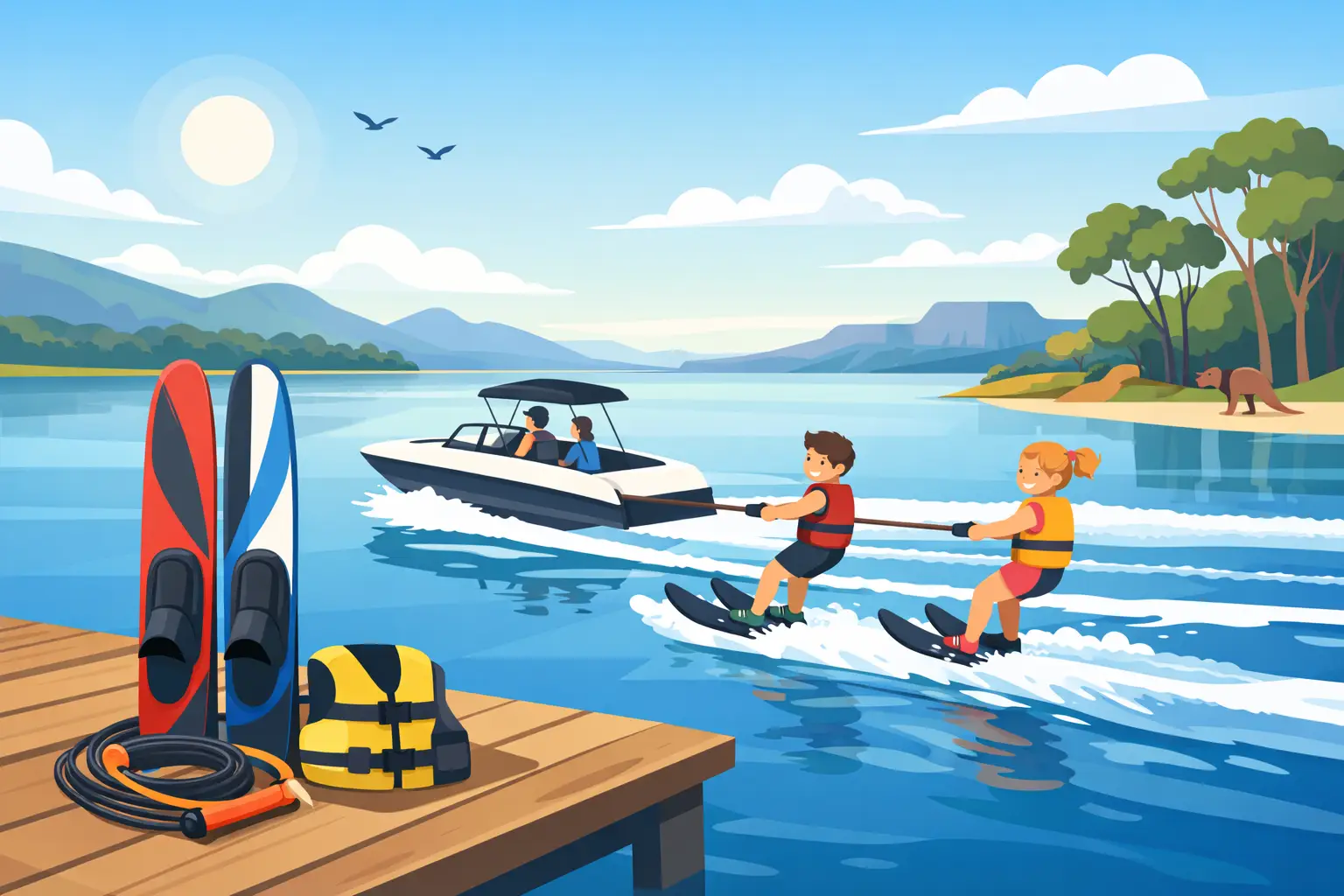
A family ski day can turn quickly when the gear is wrong. Skis that are too narrow make first starts harder, oversized bindings leave kids fighting for control, and one high-performance setup rarely suits everyone in the boat. The best water skis for families prioritise easy starts, stable rides and adjustable fit, so beginners can get up with confidence while parents and teens still have plenty of fun.
For most Australian families, the smartest choice is not a race-style slalom ski. It is a forgiving pair of combo skis sized for the riders who will use them most, paired with a proper tow rope and correctly fitted ski vests. Get that foundation right and everyone spends less time in the water sorting gear and more time carving across the wake.
What makes family water skis different?
Family skis need to work across a range of ages, weights and experience levels. That makes stability more valuable than outright speed. A wider ski creates more lift at slower boat speeds, helping a lighter rider or first-timer rise from the water without being dragged through half the lake.
Traditional combo skis are the reliable all-round answer. They are used as a pair for learning, cruising and recreational carving, and many include a rear toe plate on one ski. Once a confident skier is ready, they can remove one ski and try slalom skiing without needing to buy a separate setup straight away.
Look for a generous platform, a forgiving flex pattern and a broad tip. These features reduce the effort needed to get up and make the skis feel steadier when the boat crosses choppy water or another wake. That does not mean a family ski has to feel dull. A well-shaped recreational combo ski can still turn cleanly, build confidence and give stronger skiers a genuinely good ride.
The best water skis for families by rider type
The right ski depends less on who is most enthusiastic and more on who needs the most help getting started. If young children are joining in, their needs should guide the first purchase.
Young kids and first-time skiers
Junior trainer skis are purpose-built to make the first few runs less intimidating. They are short, wide and stable, often with a trainer bar that holds the skis together at the correct distance. This stops the classic beginner problem of skis drifting apart into an accidental split before the boat has even taken off.
A trainer rope with a handle designed for an adult to hold from the boat can also help. The child learns the tucked starting position and gets used to the pull before taking the handle independently. Keep the speed low, use calm water and make the goal simply standing up and enjoying the ride. A short, successful run beats pushing for a full lap every time.
Children grow quickly, so avoid buying a tiny ski just because it fits perfectly for one summer. Check the manufacturer’s weight range and choose within that range rather than guessing from age alone. A slightly more versatile junior option is usually the better value when siblings will share it.
School-age kids and lighter teens
For kids who have moved beyond trainer skis, junior combo skis provide the next step. They remain stable enough for easy deep-water starts but give riders space to learn basic turns, cross the wake and improve balance.
Adjustable bindings matter here. An open-toe binding accommodates different foot sizes, which is ideal when brothers, sisters and visiting mates all want a turn. It also gives growing feet more room than a closed-toe performance boot. Make sure the bindings are secure around the heel and instep without being painfully tight. Loose bindings reduce control, but overly tight bindings are uncomfortable and can make a release in a fall less predictable.
Teens and adults learning together
A full-size recreational combo ski is the sweet spot for many households. It can handle adult weight while remaining approachable for confident teens. Wider models are especially useful for a mixed group because they get up easily at moderate speeds and do not demand perfect technique.
For taller or heavier adults, ski length is critical. A ski that is too short sits lower in the water and requires more speed and strength to plane. Choose according to the stated rider weight range, then consider the boat’s pulling power and the usual water conditions. A larger ski is normally the safer pick for a heavier beginner, a slower boat or anyone who wants relaxed recreational runs.
If one adult is already a capable skier, a combo set with a rear toe plate offers room to progress. They can try single-ski riding while everyone else continues using the pair. It is a practical compromise, although it will not replace a dedicated slalom ski for someone chasing sharp turns and course skiing.
Choose the right size before you chase features
Ski sizing is not a detail to leave until checkout. It has a direct effect on how easily a rider gets up, how stable they feel and how much boat speed is required. Manufacturers publish ranges because dimensions vary between shapes, but the basic rule is simple: heavier riders need more surface area.
Use the primary rider’s weight as the starting point. If the skis will be shared by adults and older teens, select a size that comfortably supports the heaviest regular beginner. Smaller, lighter riders can still use a larger recreational combo ski, particularly at an easy speed, while a heavier adult on undersized skis may struggle from the first pull.
Boat speed changes the equation too. Children often learn at roughly 24 to 32 km/h, depending on their size and confidence. Adult beginners commonly need a little more speed, but there is no prize for going faster than necessary. The aim is enough pull for the skis to plane, not a white-knuckle ride. The driver should accelerate progressively, hold a straight line and avoid sudden throttle changes.
Bindings, fins and other features worth paying for
It is easy to focus on the ski graphics, but the hardware does the day-to-day work. Adjustable front bindings are a must for shared family gear. Check that the adjustment system is simple enough to use at the boat ramp and that it holds firmly once set.
A rear toe plate gives a more advanced rider the option to ski on one foot, while a full rear binding offers greater control for dedicated slalom use. For an all-purpose family set, the toe plate is generally more useful and less restrictive.
The fin underneath each ski helps the ski track and turn. Recreational fins are designed for predictable handling, which is exactly what learners need. Do not mistake an aggressive-looking fin or a stiff, narrow ski for an upgrade if your priority is getting everyone out of the water. Performance gear rewards strong technique. Family gear should be forgiving when technique is still a work in progress.
Build a safer family ski setup
Skis are only part of the setup. Every skier needs a properly fitted, Australian-standard-approved ski vest suited to tow sports. A vest should be snug enough that it will not ride up around the ears in the water, while still allowing the rider to breathe and move freely. Never assume an old, sun-faded vest still has the buoyancy it once did.
Use a dedicated water-ski rope with a comfortable handle, rather than a general-purpose rope of unknown condition. Inspect it for fraying, worn sections and damaged stitching before every outing. Keep hands clear of the rope while the boat is moving, and make sure the driver, observer and skier agree on basic hand signals before the first run.
Four habits make a noticeable difference to a family session:
- Start in clear, open water away from swimmers, shorelines and other vessels.
- Use an observer so the driver can keep eyes forward while someone watches the skier.
- Turn the engine off when a skier is entering or leaving the water near the boat.
- Keep early runs short, especially for children who tire faster than they realise.
A calmer lake, a straight pull and a patient driver are often more valuable than buying a more expensive ski.
One shared pair or separate skis?
A single pair of adjustable combo skis can be great value for a family with teens and adults of similar size. It keeps the boat lighter on gear and gives everyone a familiar setup. But if there is a big gap between a small child and a heavier adult, two sets are the better call: junior trainers for young learners and adult-sized combo skis for everyone else.
That setup prevents compromise at both ends. Kids get skis that hold their position and help them stand up, while adults have enough surface area to start comfortably. It also means less binding adjustment between runs and fewer impatient people waiting on the swim platform.
At Mac’s, choosing from specialist water-ski gear means you can match ski size, bindings, rope and vests as one setup rather than piecing together whatever is available. The best value is not always the cheapest pair on the shelf. It is the gear that keeps being used across the season because every rider feels comfortable stepping in.
Give every rider a reason to have another go
The best family ski is the one that makes learning feel achievable. Start with stable combo skis, size them honestly for the people using them, and do not skip the safety gear that keeps the day running smoothly. When the first-timer gets up, the teenager crosses their first wake and Mum or Dad takes one more lap before lunch, you have chosen well.
