


Can You Use Skateboard Helmets for Snow?
08 August 2026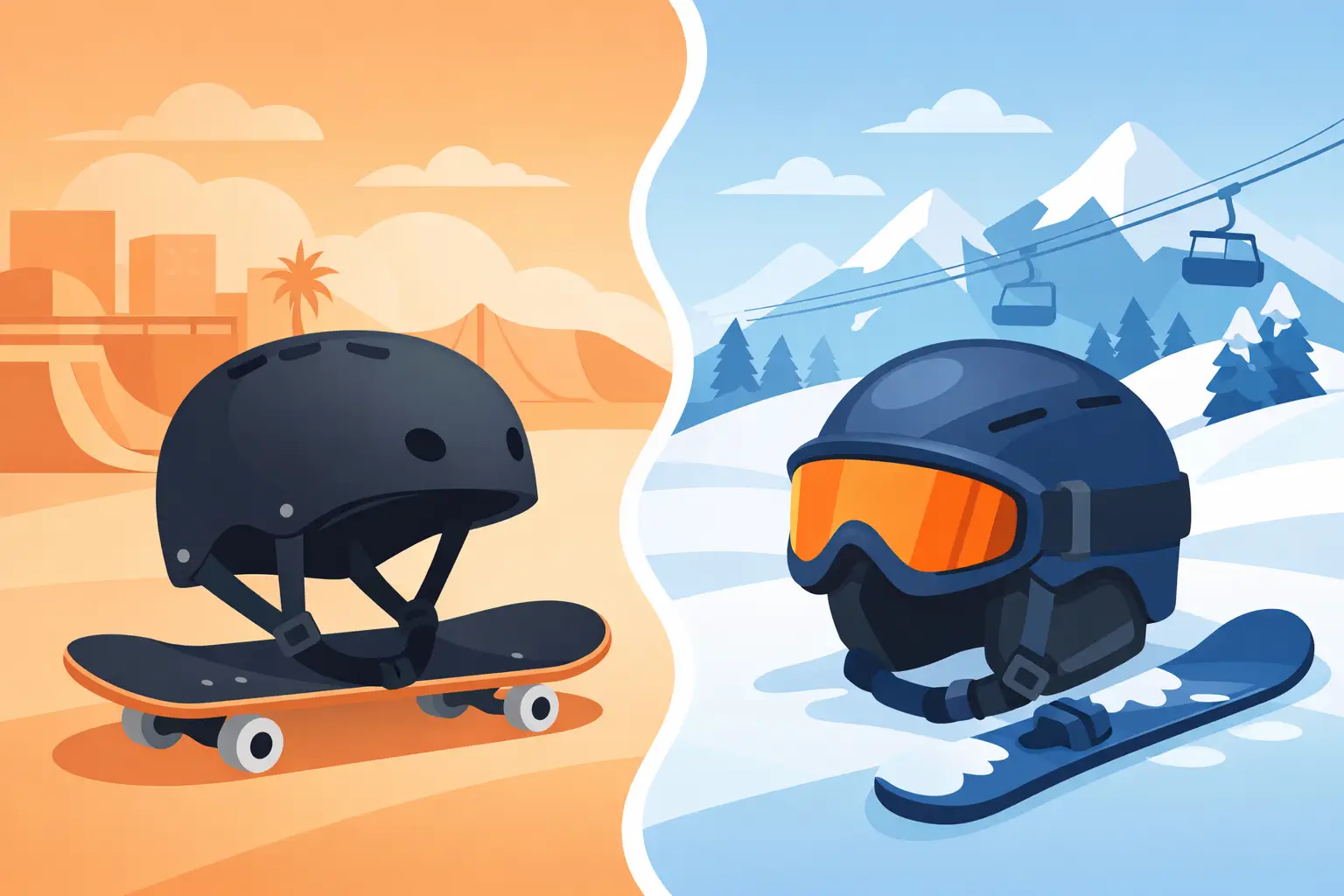
You have packed the board, found your goggles and dug out last season’s jacket. Then you spot your skate helmet on the shelf and wonder: can you use skateboard helmets for snow? The short answer is only if that specific helmet is certified for snow sports too. If it is built and certified only for skating, leave it at home and wear a proper snow helmet instead.
A helmet might look like a helmet, but snowboarding and skiing create different impact risks, weather conditions and fit requirements. Choosing the right one is a small call that makes a big difference when you are riding hard, learning your first turns or chasing the kids around the mountain.
Can you use skateboard helmets for snow safely?
A skateboard helmet can be used for snow only when it carries a recognised snow-sports certification, such as ASTM F2040 or CE EN 1077. Some helmets are designed as multi-sport models and may show both skate and snow certifications on the label. Those are the exceptions, and they can be a handy option for riders who split their time between the skatepark and the slopes.
If the label lists only a skate certification, such as ASTM F1492 or CPSC, it has been tested for skate use rather than skiing or snowboarding. That does not automatically mean it will fail in a fall, but it does mean it has not been tested and approved for the impacts expected in snow sports. For a snow trip, that is not a gamble worth taking.
The safest approach is simple: check the certification sticker inside the helmet, not just the product description or its shape. A retailer can help decode the labels, but the physical marking inside your helmet is what counts.
Why snow helmets and skate helmets are different
Both types of helmet are designed to reduce the risk of head injury. The difference is in how they are engineered, tested and worn. Skiing and snowboarding involve speed, firm groomed runs, trees, terrain features, lift queues and icy patches. A fall can mean a long slide or an impact with a hard, fixed object.
Skate helmets are developed around the types of falls common on concrete, ramps and rails. Many have a hard outer shell with protective foam inside, and some are made to handle more than one lower-force knock. Snow helmets are usually designed around a different testing standard that considers impacts at the speeds and surfaces associated with skiing and snowboarding.
That does not make one category universally better than the other. It means each is intended for its sport. A full-face downhill mountain bike helmet is not automatically a snow helmet either, even though it offers a lot of coverage. Certification is the deciding factor.
Snow-specific warmth and ventilation matter
Anyone who has ridden a chairlift in a freezing wind knows that warmth is not an afterthought. Snow helmets commonly have insulated liners and ear pads that keep heat in without making you feel boxed in. They also use adjustable vents to help release heat when you are hiking the park, lapping spring slush or working up a sweat on a long run.
A skate helmet is generally made for warmer conditions and may feel very cold on the chairlift. You can add a thin beanie underneath, but that can interfere with fit and create pressure points. A helmet only works properly when it sits directly, securely and comfortably on your head.
Goggle fit is part of the setup
A snow helmet is shaped to work with snow goggles. The helmet rim, goggle channel and rear strap retainer are all designed to keep your goggles sitting correctly against your face. This helps prevent the annoying gap between your goggles and helmet where cold air gets in, often called a gaper gap.
A skate helmet may technically hold goggle straps, but it can leave gaps, push goggles down on your nose or let them shift as you ride. That affects comfort, vision and confidence, especially in flat light or snowing conditions.
Coverage and comfort are built for a day on the mountain
Snow helmets often provide coverage around the ears and back of the head, with padding that stays comfortable for a full day. They are also made to accommodate goggle straps and, in many cases, audio-ready ear pads.
Skate helmets can feel bulkier in the wrong places or expose your ears to the elements. The right snow helmet should feel secure without squeezing your temples, lifting off your forehead or moving when you shake your head.
How to check whether your helmet is snow-approved
Before you decide to reuse an existing helmet, inspect it closely. Start inside the shell, usually under the liner or near the back, where the certification labels are located. Look for a snow-sports standard, not just a general statement that the helmet is protective.
Common markings you may see include:
- ASTM F2040, a standard used for recreational snow sports helmets
- CE EN 1077, the European standard for alpine ski and snowboard helmets
- ASTM F1492, commonly associated with skateboarding helmets
- CPSC, commonly associated with bicycle and skate-style helmets
A helmet with ASTM F2040 or CE EN 1077 is suitable for snow sports when it fits correctly and is in good condition. A dual-certified helmet that lists both a skate and snow standard gives you genuine flexibility across both sports.
Be cautious with old helmets, even if they were snow-certified when new. UV exposure, heat in the car, repeated knocks and general wear can affect the shell, foam and straps. If you can see cracks, dents, compressed foam, damaged buckles or loose padding, replace it. After a significant hit, replace a snow helmet even when the damage is not obvious. Protective foam can be compromised beneath the surface.
Getting the fit right for skiing or snowboarding
The best-certified helmet will not do its job if it is loose. Fit is where trying helmets on pays off, particularly if you have goggles already. Bring them with you if possible.
Start by measuring around the widest part of your head, roughly one centimetre above your eyebrows. Use that measurement as a guide, then try on a few models because head shapes vary between brands. The helmet should sit level, just above the eyebrows, with no big gap at the front.
With the chin strap undone, gently move the helmet side to side and up and down. Your scalp should move with it. It should not rock around or slide back to expose your forehead. Then fasten the strap so it is snug under your chin, with enough room for one finger but not a fistful of slack.
Put your goggles on last. They should meet the helmet cleanly without forcing either piece out of position. If the goggles press heavily on your nose, leave a gap at the forehead or push the helmet upwards, try another helmet-and-goggle combination.
Do not size up for a beanie
A loose helmet is not warmer or safer. Most snow helmets come with removable liners, ear pads and adjustment systems, so you can tune the fit for changing conditions. If you want extra warmth, choose a thin helmet-compatible liner rather than forcing a thick beanie underneath.
For kids, resist buying a helmet with heaps of room to grow. A correctly fitted youth helmet, adjusted properly, is the better choice. Children also benefit from having their goggles fitted with the helmet before the trip, rather than dealing with fogging and discomfort on day one.
When a multi-sport helmet makes sense
A dual-certified helmet can be a smart buy for a rider who skates through summer and gets away for one or two snow trips each winter. It saves storage space and lets you use familiar gear, provided it meets the relevant standards and fits well with your goggles.
There are trade-offs. A dedicated snow helmet will usually provide better cold-weather comfort, goggle integration and mountain-specific features. For someone spending a full season in the snow, riding regularly in Victoria or heading to Japan, New Zealand or the Australian resorts every year, a purpose-built snow helmet is generally the better investment.
For occasional riders, a properly certified dual-sport option can be practical. Just do not mistake a skate-style look for dual-sport protection. The label needs to back it up.
Choose gear that lets you focus on the run
Your helmet should disappear once you are riding: no cold ears on the lift, no goggles slipping, no pressure points and no second-guessing whether it is made for the job. At Mac’s, the best setup is always the one that matches how and where you ride, from a first-timer’s weekend at the snow to a full winter of park laps. Check the certification, dial in the fit and get out there with gear you can trust.
