


Snowboard Boots vs Ski Boots for First Timers
11 August 2026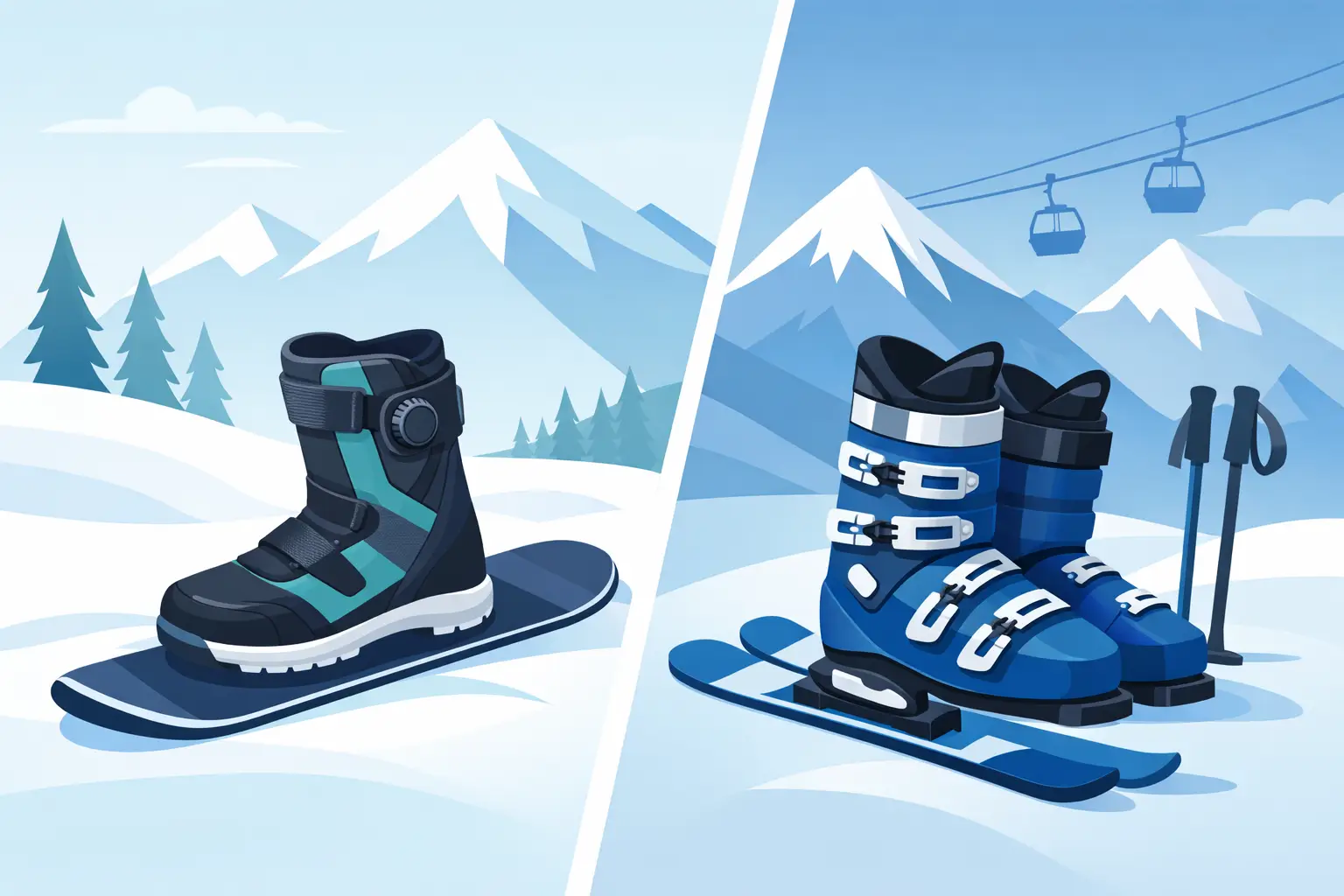
Your feet will tell you more about a day on the mountain than your mates, the snow report or the chairlift queue ever will. Get the wrong footwear and even a brilliant bluebird day at Hotham, Falls Creek or Perisher can feel very long. When comparing snowboard boots vs ski boots, the biggest difference is simple: snowboard boots are built to flex and move, while ski boots are built to hold your lower leg firmly in place.
That difference affects how you ride, walk, turn, fit into bindings and choose the right gear for your first snow trip. They are not interchangeable, even if both are called boots and both keep your feet warm.
Snowboard boots vs ski boots: the main difference
Snowboard boots look and feel closer to a supportive winter boot. They have a flexible outer, a cushioned liner and a grippy rubber sole. Your boot sits on top of the snowboard binding, where straps or a rear-entry system hold it securely across the ankle and toe area. The boot needs enough flex for you to bend your knees, pressure your edges and move naturally from heel edge to toe edge.
Ski boots are a hard plastic shell with buckles, a supportive liner and a rigid sole shaped to lock into ski bindings. They transfer small movements from your shin and foot directly into the ski. That direct connection is a huge part of what gives skiers precision on groomed runs, at speed and through firmer snow.
Neither design is better across the board. It depends on whether you ski or snowboard, your ability level and the kind of riding you want to do. A soft, comfortable snowboard boot would be too vague for skiing. A stiff ski boot would make snowboarding almost impossible and seriously uncomfortable.
Flex: freedom on a board, precision on skis
Flex is where the contrast becomes obvious. Snowboard boots are available in soft, medium and stiff flex ratings. Softer boots are forgiving, easier to bend in and popular with beginners, park riders and anyone who values comfort. Medium flex is the all-mountain sweet spot for many riders, balancing response with a relaxed feel. Stiffer boots react faster and support more aggressive carving, higher-speed riding and deeper snow.
A snowboard boot should still feel secure. If your heel lifts noticeably when you lean forward or roll onto your toes, the boot is likely too big or not laced correctly. More flex does not mean a loose fit.
Ski boots use a flex index rather than the soft-to-stiff labels commonly used for snowboard boots. Higher numbers mean more resistance to forward movement. A recreational beginner may start with a softer ski boot, while advanced skiers often choose a much stiffer shell for stronger edge control. Ski boot flex also changes with temperature, so a boot that feels manageable in a warm shop can feel firmer on a frosty Victorian morning.
For both sports, chasing the stiffest boot is rarely the answer. The right flex should match your weight, strength, technique and goals. A boot that is too stiff can make learning harder because you cannot move into the positions the sport requires.
Fit matters more than the size on the box
Snowboard and ski boot sizing can catch out first-time snow travellers. Street shoe sizing is only a starting point, and sizes can vary between brands. The goal is a close, secure fit without sharp pressure, numbness or crushed toes.
In a snowboard boot, your toes should lightly brush the end when you stand upright. Once you bend into a riding stance, they should pull back slightly. Your heel needs to stay planted when you flex forward. A little liner pack-out over time is normal, which is why buying a boot that feels roomy from day one is a common and costly mistake.
A ski boot should feel even more precise. When standing tall in the shell, your toes may touch the front. Flexing forward into skiing position should bring them away from the end. The heel and ankle should feel firmly held, while the forefoot should not be painfully squeezed. Ski boots are designed around a close performance fit, not the slipper-like comfort people often expect.
Width is just as important as length. Feet come in different shapes, and boots come with different internal volumes and lasts. A narrow foot swimming around in a wide boot loses control. A wide foot forced into a narrow boot can go numb before lunch. This is where proper fitting advice is worth its weight in hot chips at the end of the day.
Socks can make or break the fit
Use one pair of purpose-made snow socks. Thick everyday socks create folds and pressure points, while doubling up socks usually makes a tight boot colder rather than warmer by restricting circulation. A thin-to-medium merino or synthetic snow sock gives warmth, moisture control and a cleaner fit.
Do not tuck trackies, thermals or the hem of your pants into the boot. Keep only your sock inside, then run your outer pant leg over the top of the boot to keep snow out.
Bindings decide what fits what
Snowboard boots only work with snowboard bindings, and ski boots only work with ski bindings. The soles, mounting points and release systems are completely different.
Snowboard bindings are sized to suit a range of boot sizes, usually small, medium or large depending on the brand. The boot must sit centred on the baseplate with the heel cup and straps adjusted properly. A boot that is too large for the binding can drag its toe or heel in the snow during deep turns. One that is too small may not be held securely.
Ski boot compatibility is more technical. Alpine ski boots need bindings designed for their sole standard, and different touring or GripWalk-style soles may require compatible bindings. The binding also needs to be adjusted to the individual boot by a qualified technician. It is not a set-and-forget job, especially if you change boots or share skis within the family.
If you are hiring skis or a snowboard for a weekend away, the hire team will match the boots and bindings for you. If you own your setup, check compatibility before you buy, not in the car park on the first day of the season.
Which boots are easier for beginners?
Walking around in snowboard boots is generally easier. Their softer construction and rubber soles make them more practical for carrying a board from the resort car park, lining up for coffee or shuffling around the lodge. They are still bulky, but they feel familiar quickly.
Ski boots are awkward to walk in because the rigid shell limits ankle movement. Most skiers learn the short, wide stance walk straight away. It is not graceful, but it works. The upside is that once clipped into skis, the same rigidity gives reliable support and response.
On snow, a beginner snowboarder benefits from a soft to medium-flex boot with a comfortable, secure liner. A beginner skier benefits from a suitably soft boot that is fitted closely enough to control the skis without causing pain. Comfort matters in both cases, but comfort should come from the right shape and fit, not extra empty space.
Lacing systems and everyday practicality
Traditional laces offer a customisable fit and are easy to replace, but they can take longer to tighten with cold fingers. Boa systems use a dial and cable for quick, even adjustment, with some boots using separate zones for the lower foot and upper cuff. Speed-lace systems pull tight quickly and are popular with riders who want to get geared up fast.
There is no universally best snowboard lacing system. Riders who want fine adjustment may prefer dual-zone Boa or laces. Riders who value convenience often like a dial system. What matters is that the boot locks your heel down and feels evenly secure across your foot.
Ski boot buckles are designed for strong, repeatable closure. Most models also have power straps at the top of the cuff. Buckles should be firm, not cranked down until circulation disappears. If you need to overtighten them to stop movement, the boot shape or size may be wrong.
When to buy and when to hire
Hiring is a smart call if you are trying skiing or snowboarding for the first time, heading away once a year, or bringing fast-growing kids to the snow. It lets you test the sport without committing to a full setup. For a first trip, the best boot is often the one that fits correctly and is adjusted by someone who knows what they are doing.
Buying starts to make sense when you go regularly, know your preferred sport, or want consistent fit and performance. Boots are the most personal part of your setup. Owning a well-fitted pair means no guessing from hire stock and no starting each trip by breaking in a different boot.
At Mac’s, specialist snow staff can help narrow down the right boot feel, size and binding match before you gear up for winter. Bring the socks you plan to ride in, allow enough time to try a few options, and be honest about your ability and where you want to progress.
The best choice is not the flashiest boot or the one your mate rides. It is the pair that holds your foot securely, suits your sport and still lets you focus on that next turn instead of your aching toes.
