


Best Skate Pads for Beginners: What to Buy First
08 November 2026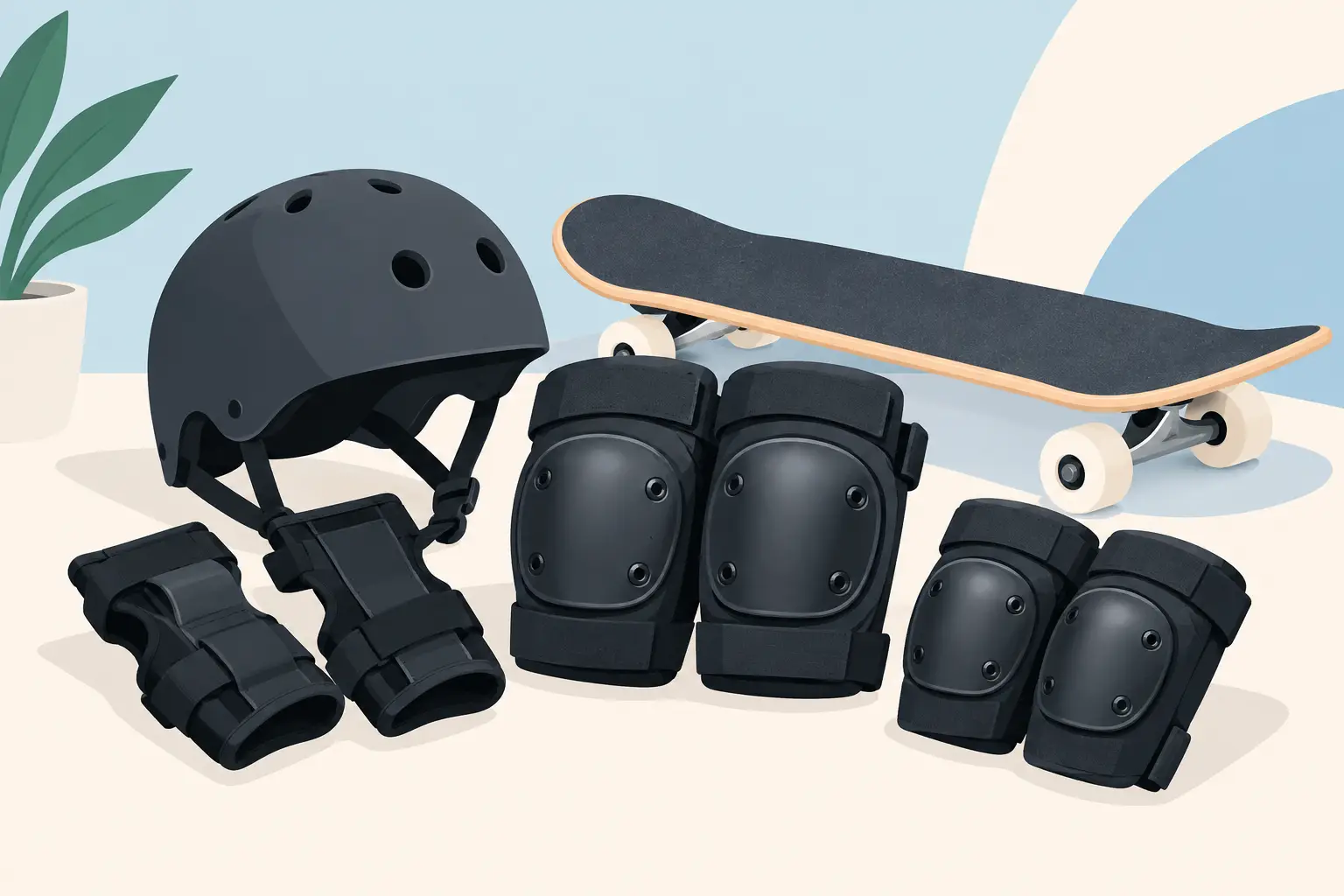
A first proper slam can turn an exciting afternoon at the skatepark into a sore week off the board. The best skate pads beginners can buy are the ones that fit securely, cover the areas most likely to hit concrete and feel comfortable enough to wear every session. That last part matters: protective gear only works when it is actually on your body.
Whether you are learning to push on a cruiser, rolling your first ramps or helping a young skater get started, a knee, elbow and wrist guard set is one of the smartest first purchases. Boards can be replaced. Confidence is harder to rebuild after a nasty fall.
Best skate pads for beginners: start with a full set
For most new skaters, a complete three-piece pad set is the right place to start. It includes knee pads, elbow pads and wrist guards, covering the most common contact points when someone loses balance forward, sideways or backwards.
Buying a matching set also removes guesswork. The pads are designed to offer a consistent level of protection, sizing is usually straightforward, and it is typically better value than piecing together individual items. A helmet should sit alongside the set from day one, but it is not a substitute for pads.
Full sets make particular sense for kids, teens and adults learning park skating, transition, bowls or ramps. Concrete is unforgiving, and early progress involves plenty of falls. Even casual street skaters benefit from wrist guards and knee pads while they are figuring out foot placement, stopping and turning.
There is one exception: a rider who is only cruising smooth bike paths at low speed may prefer wrist guards and a helmet first, then add knee and elbow protection as they move to rougher ground or start learning tricks. For everyone else, start complete and adjust later.
What makes a good beginner skate pad?
The strongest-looking pad is not automatically the best choice. Good beginner protection balances impact resistance, coverage, fit and freedom of movement. If a pad pinches behind the knee or slides around after five minutes, it will end up in the bottom of a gear bag.
A hard cap that can take a hit
Knee and elbow pads for skateboarding generally use a tough plastic outer cap over dense foam. The cap helps the rider slide rather than stick when they hit concrete. That sliding action can reduce the sudden twisting force that comes from a knee catching on rough ground.
Look for a cap that extends across the point of the knee or elbow, rather than a small shell with lots of foam exposed around the edges. More coverage is useful for beginners because falls rarely land perfectly in the middle of the pad.
Soft pads can be comfortable for cruising and are easy to wear under loose clothing, but they are generally better suited to light impacts. If ramps, skateparks or trick practice are on the agenda, hard-cap pads offer the more dependable option.
Enough foam to cushion, not just look padded
The foam beneath the cap absorbs the initial impact. Thin, low-density foam can feel fine in the shop but offers less protection when a rider lands hard. A quality skate pad has substantial cushioning that wraps around the joint, not just a small patch beneath the plastic.
More padding usually means more bulk and warmth, especially through an Australian summer. That is a fair trade when learning. Once a skater has better board control and knows the type of riding they enjoy, they can decide if a slimmer pad suits their style.
Secure straps and a stable fit
Pads must stay centred on the joint during a fall. Adjustable hook-and-loop straps are common because they let riders fine-tune the fit, even over different layers of clothing. Wide straps spread pressure more evenly and are less likely to dig in.
Some knee pads use a slide-on sleeve with straps over the top. These can feel more locked-in, although they require the skater to pull them over their foot or take their shoes off to put them on. Open-back pads wrap around the leg and are quicker to fit at the park. Neither is automatically better – choose the style the rider will happily use.
For wrist guards, check that the splint runs along the palm and supports the wrist without making it impossible to grip a board. Beginners often put their hands out instinctively, so wrist protection is far from optional. A proper guard helps spread the force of that impact, though it cannot eliminate every risk.
How skate pads should fit
Correct sizing is the difference between protection and decoration. Start with the manufacturer’s size chart, then measure the relevant part of the body rather than selecting a size based only on age. For knee pads, this is usually the circumference around the leg near the knee. For elbow pads, measure around the arm close to the elbow. Wrist guards commonly use palm width or wrist circumference.
Once fitted, bend and straighten the joint a few times. A knee pad should sit squarely over the kneecap and remain in place when squatting. An elbow pad should cover the bony point of the elbow without cutting into the inside of the arm. Wrist guards need to feel snug through the palm and wrist, but fingers should move freely.
A pad that is too loose will rotate or slip at exactly the wrong time. A pad that is too tight can restrict movement, cause numbness or make a beginner want to take it off. If the rider is between sizes, consider their build, the pad style and whether they will wear it over clothing. For growing kids, avoid buying massively oversized pads to last several seasons. A secure fit now is worth more than extra room later.
Match the pads to where you skate
The best protection changes with the terrain. A first-time skater rolling around a basketball court has different needs from someone dropping into a mini ramp.
For skateparks, bowls and ramps, choose hard-cap knee and elbow pads with generous foam, plus wrist guards. These surfaces encourage faster riding and repeated falls, particularly when learning to pump, carve, kickturn and drop in. A helmet is essential here.
For street skating, hard-cap knee pads still make sense while learning ollies, rolling off kerbs and attempting early tricks. Wrist guards are especially valuable because falls onto hands are common. Elbow pads can feel less essential to some street skaters, but beginners should keep wearing them until falling technique and balance improve.
For cruising or learning on a longboard, wrist guards are often the priority, followed closely by knee pads. Longboards can gather speed quickly on even a modest slope. If downhill riding is the plan, do not treat it as beginner territory – get experienced advice, use proper protection and start on flat ground.
Don’t overlook helmets and skate shoes
Pads work best as part of a complete beginner setup. A certified skate helmet protects the head in the type of low-speed, repeated falls that happen while learning. It should sit level on the head, low on the forehead, with the straps adjusted so it does not rock backwards or side to side.
Skate shoes also make a genuine difference. A flat sole gives more reliable board feel and grip than running shoes, while durable uppers handle the abrasion of griptape. Good shoes help a rider place their feet correctly, which can mean fewer awkward falls in the first place.
At Mac’s, the aim is simple: get new skaters into gear that suits the way they want to ride, not just the cheapest item on the shelf. A properly fitted set from a trusted skate protection brand is a better buy than pads that shift after one session.
When should beginners replace skate pads?
Inspect pads regularly, especially after a heavy slam. Surface scratches on hard caps are normal and show the pads are doing their job. Replace them if the plastic is cracked, straps no longer fasten securely, stitching has failed or the foam has become compressed, torn or detached.
For children, reassess fit each season and any time the pads start leaving deep marks or slipping down. Pads can last a long time with basic care: air them out after use, brush off dirt and avoid leaving them baking in a hot car. If they become particularly grimy, follow the care instructions rather than throwing every piece into the washing machine.
The right pads give a beginner permission to try again after a fall. Start with a secure full set, make sure it fits before the first roll, and spend more time learning lines at the park than worrying about the concrete.
