


How to Choose a Kneeboard for Your Riding
30 July 2026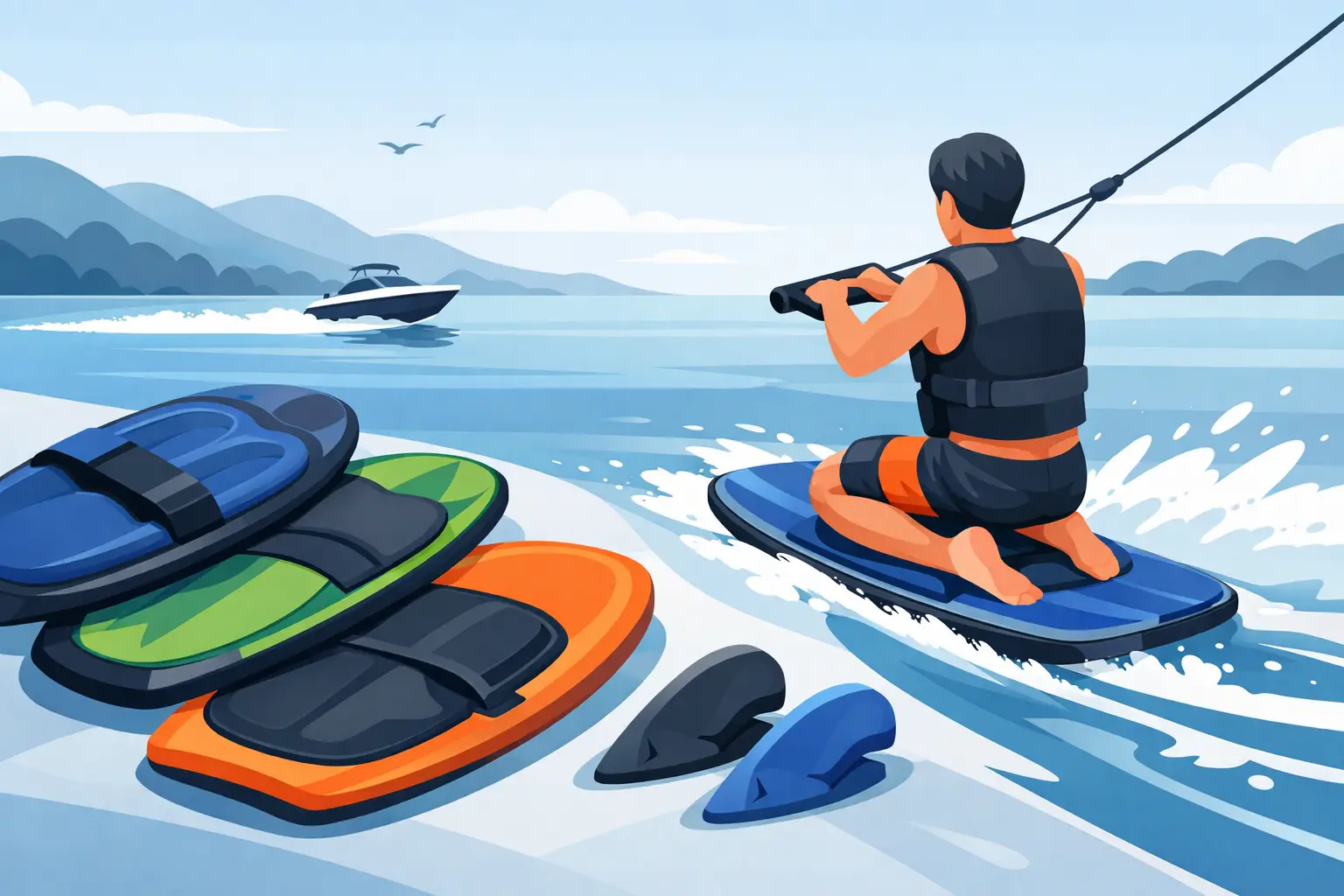
The right kneeboard can turn a hesitant first run into a full afternoon behind the boat. If you are wondering how to choose a kneeboard, start with the rider – their confidence in the water, size, preferred riding style and what they want to learn next. A board that gets a beginner up easily is not always the board an experienced rider will want for spins, wake jumps and surface tricks.
Kneeboarding is one of the most approachable tow sports around. Riders sit low, starts are manageable, and a good recreational board gives you plenty of stability while you build confidence. But shape, construction, strap design and bottom features all change how a board feels on the water. Getting those details right means more comfortable rides, quicker progression and fewer frustrating swims back to the boat.
How to choose a kneeboard by rider level
For first-timers, families and younger riders, stability should be the priority. Look for a wider board with a generous kneeling area, a comfortable padded deck and a deep centre channel or tunnel underneath. These features help the board track straight and reduce side-to-side wobble as the rider gets settled.
A beginner-friendly kneeboard should also have a forgiving edge profile. Softer, rounder rails are less likely to catch unexpectedly, making turns feel predictable rather than twitchy. Many entry-level boards include a moulded hook at the front, which holds the tow handle during deep-water starts. This lets the rider use both hands to get their knees into position before taking the handle.
More confident riders can look for a board with a sharper edge, more defined channels and a livelier rocker line. These boards respond faster when edging towards the wake and release more cleanly for spins. The trade-off is that they demand better balance and edge control. They can feel less relaxed on a casual cruise, but they reward riders who want to push their wake-to-wake jumps or learn their first 360.
For dedicated trick riding, a performance or twin-tip style kneeboard is usually the better call. A symmetrical shape lets you ride and land switch more naturally, while a continuous rocker keeps the board quick and predictable across the wake. If the rider is still learning to cross the wake comfortably, though, a versatile recreational board is often the smarter buy.
Size, weight and fit matter more than most riders expect
Unlike skis, kneeboards are not selected by a precise length chart. Most adult and family models are designed to suit a broad range of rider sizes. Still, larger or heavier riders generally benefit from a board with more surface area and volume, while lighter kids will find an oversized board harder to control.
Check the manufacturer’s recommended rider weight range before buying, especially if the board is for a child. A board that is too small can sink deeper and feel unstable during the start. One that is too large may be difficult for a lighter rider to roll onto edge or manoeuvre through a turn.
The kneeling pad deserves a close look as well. A quality EVA pad provides grip when wet and cushions the rider’s shins and knees. A textured, well-shaped pad helps hold the rider in place during turns without feeling abrasive after a few sets. For regular riders, this is not a minor comfort feature – it can decide whether they want another run or call it after ten minutes.
Then there is the strap. A wide, padded adjustable strap is the usual choice for recreational riders because it is easy to get in and out of and suits different leg sizes. It should secure the rider through wake crossings without pinching or restricting movement. Avoid overtightening it. You want firm support, not a strap that makes releasing from the board difficult after a fall.
Choose the right construction for the way you ride
Most family kneeboards use durable roto-moulded construction. These boards are built to handle a busy summer of kids, mates, boat decks and the occasional bump against the jetty. They tend to be stable, forgiving and better value, which makes them a great option for holiday homes, shared boats and riders starting out.
Compression-moulded or performance-built boards are typically lighter, stiffer and more responsive. Their firmer flex gives riders stronger edge hold and more pop off the wake. They are the choice for riders who are already comfortable cutting, jumping and spinning, but they generally cost more and benefit from more careful handling.
There is no wrong option here. A tough, easy-going board is often the best board in the boat. Buy performance construction when it matches the rider’s ambition, not simply because it sounds more advanced.
Look underneath the board
The base of a kneeboard does much of the work. Channels, tunnels, fins and rails determine whether it tracks straight, cuts hard or breaks free easily for surface spins.
A deep centre tunnel helps the board sit securely in the water and gives beginners a stable, confidence-building ride. Moulded channels direct water flow and add grip when the rider leans into a turn. These are useful for anyone learning to cross wakes or edge out wide before cutting back in.
Fins increase tracking and control, particularly at speed. A board with pronounced fins will feel planted when carving, but may be less loose when attempting spins. Some performance models use removable fins, giving experienced riders room to tune the board. Run larger fins for carving and wake jumps, or reduce fin grip when you want a freer, more playful feel.
The rocker – the curve from nose to tail – also changes the ride. A flatter board tends to be fast and efficient, ideal for cruising and clean wake crossings. More rocker can help the board lift and land more smoothly off the wake, although it may feel slower across flat water. For a first board, a balanced, all-round rocker is usually the sweet spot.
Match your kneeboard to the boat and water conditions
A kneeboard does not need a massive wake to be fun. In fact, smooth water, a reliable tow rope and a sensible speed matter more than having a high-powered boat. Beginners should start at a comfortable speed that lets the board plane without dragging them along too quickly. As a general guide, kids often begin around 20 to 26 km/h, while many adult recreational riders are comfortable around 26 to 34 km/h.
Speed should be adjusted for the rider, water conditions and board style. Too slow, and the board can feel bogged down. Too fast, and a beginner may struggle to maintain position or cross the wake with control. The driver should build speed gradually and keep a clear line of communication with the rider.
Use a dedicated tow rope and handle in good condition. Keep the rope well clear of the propeller, avoid crowded waterways, and give the rider a clear run before turning. On choppy bays, rivers or busy holiday stretches, a stable board with strong tracking features will be far more enjoyable than a loose trick-focused design.
Do not treat safety gear as an add-on
Every rider should wear a properly fitted, approved life jacket or ski vest suited to tow sports. A vest designed for active water use gives the rider freedom through the shoulders while helping them stay buoyant after a fall. Make sure it fits snugly before getting in the water – a loose vest can ride up when the rider hits the water.
A competent observer in the boat is essential, not optional. The driver focuses on the water ahead while the observer watches the rider, rope and hand signals. Agree on simple signals before the first set: thumbs up for faster, thumbs down for slower, a hand across the throat to stop, and a raised hand after a fall.
Choose open water away from swimmers, fishing lines, shallow hazards and other vessels. Riders should fall clear of the board where possible, let go of the handle, and signal that they are okay before the boat returns. These basics keep the day moving and give parents peace of mind when the kids are lining up for another go.
Buy for progression, not just this weekend
The best first kneeboard is usually one that feels easy now but leaves room to improve. For a family, that often means a durable all-round board with a padded strap, start hook, stable shape and enough control for wake crossings. For a rider already landing small jumps, spending more on sharper rails, a responsive base and a trick-friendly shape can make a real difference.
If you are comparing a few options, think about who will use it most often, where you ride and whether the goal is relaxed summer laps or serious trick progression. At Mac’s, the right advice starts with those questions, not with pushing the most expensive board on the rack. Get the fit and features right, then get out early while the water is glassy – that is where every good kneeboard session starts.
