


Best Wakeboard Packages for Beginners in AU
22 July 2026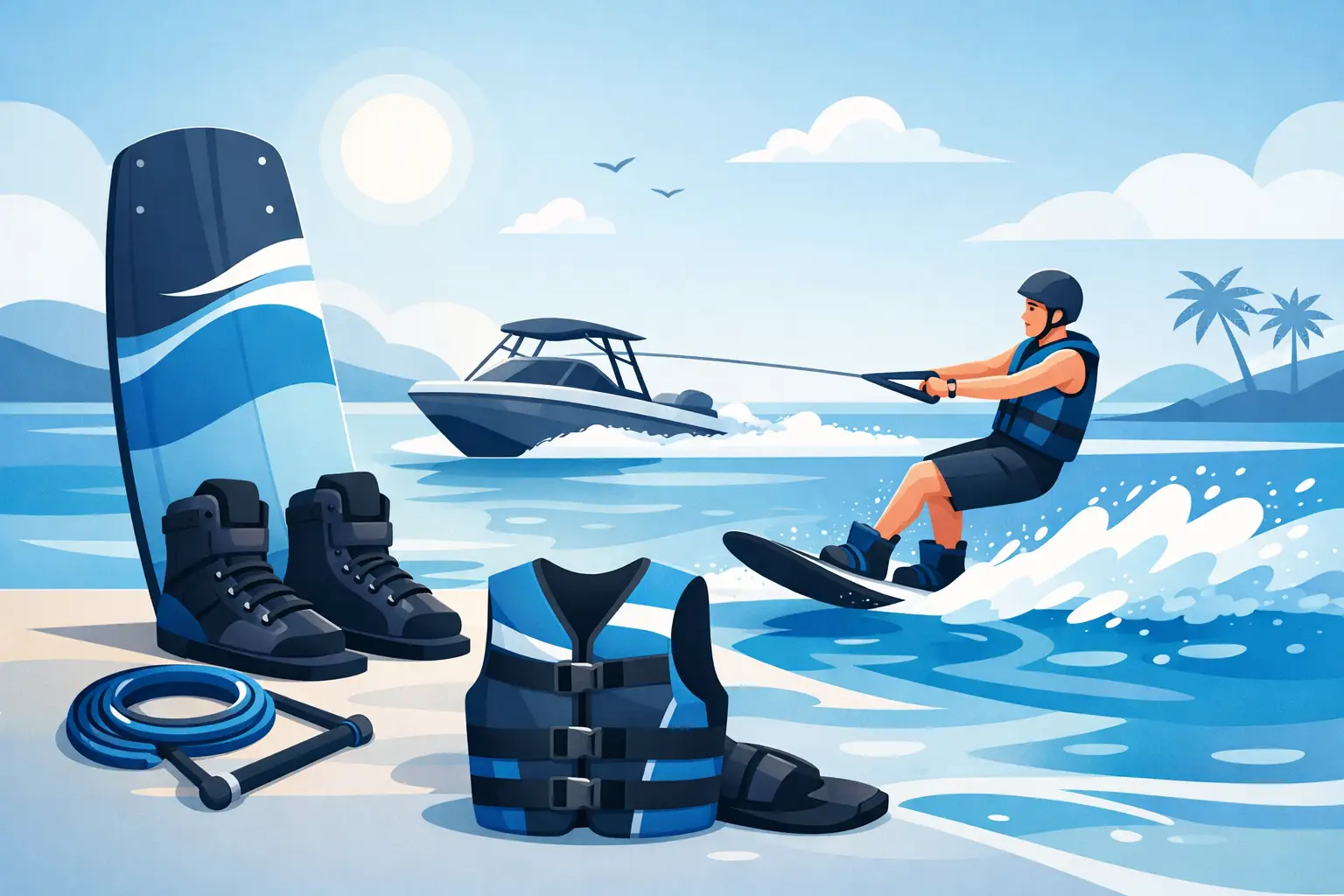
A first wakeboard set should get you up, turning and smiling – not leave you fighting stiff bindings or a board that feels like a barge. The best wakeboard packages for beginners make the first few sets behind the boat simpler by matching a forgiving board with adjustable bindings, so you can focus on edging, balance and getting back up after the inevitable stacks.
A package is also one of the smartest ways to buy your first setup. Rather than piecing together a board and boots that may not suit each other, you get a ready-to-ride combination with better overall value. The key is knowing which features genuinely help a new rider and which are better saved for later.
What makes a beginner wakeboard package worth buying?
Wakeboarding has a learning curve, but the right gear takes some of the sting out of it. A beginner-friendly board is designed to be predictable on the water. It should track cleanly, release without catching too aggressively and offer enough stability for riders still finding their stance.
The board shape matters more than flashy graphics. Look for a continuous or mellow hybrid rocker profile. A continuous rocker creates a smooth, predictable lift off the wake, while a mellow hybrid keeps the ride easy and gives you room to progress. More aggressive three-stage rockers can generate a bigger, punchier pop, but they can also feel slower and less forgiving when you are learning to edge correctly.
A wider board with a stable platform is usually a good place to start. It gives you more surface area, helps with getting out of the water and makes slow-speed riding less twitchy. That does not mean every beginner needs the biggest board available. Your weight, boat speed and riding style still matter.
Start with the right board size
Board length is not just a number on a sticker. A board that is too short can feel loose and sink more easily at slower speeds. One that is too large may feel harder to move from edge to edge. For most adult beginners, a slightly larger board is the safer call because it provides extra float and stability.
As a broad guide, riders around 50 to 70 kg often suit boards in the low-to-mid 130 cm range. Riders around 70 to 90 kg commonly land in the 138 to 142 cm range, while heavier riders may be better on a 144 cm board or larger. These are starting points, not rules set in stone. A taller rider, a rider learning behind a smaller boat, or someone who wants a relaxed freeride feel may prefer more board underfoot.
Kids need a board sized for their weight and strength, not an adult board they can “grow into” for five summers. A board that is too big can be difficult for a young rider to control. Junior packages pair a smaller, lighter board with bindings that accommodate smaller feet, making those first water starts far less frustrating.
Do not overlook rider weight
When comparing packages, check the manufacturer’s recommended rider-weight range before choosing by length alone. This is especially important if one setup will be shared among family members. A versatile package can work brilliantly for a household, but it needs to suit the heaviest regular rider as well as the lighter ones.
If two adults with very different body weights will ride often, buying a board that suits the middle ground can work for casual laps. If one rider is significantly heavier, stepping up a size is normally the more practical choice.
Bindings can make or break your first season
In a beginner package, bindings should feel supportive without locking your feet into an uncomfortable position. Open-toe bindings are a popular choice for first-time riders and families because they adjust across a wider range of shoe sizes. One board can then be shared between siblings, mates or parents without needing a separate pair of boots for every rider.
Closed-toe bindings offer a more precise fit and are a strong option for riders who know the board will only be theirs. They are generally more responsive, but they cost more and are less practical for a shared setup. For a first package, easy entry and reliable adjustment are often more valuable than maximum response.
Look for bindings with secure lacing, comfortable liners and a flexible feel. New riders need to be able to stand tall, bend their knees and move naturally. Very stiff boots can feel brilliant for an experienced rider driving hard through the wake, yet be overkill when you are simply learning to stand up and ride both directions.
It is also worth checking the binding mounting system. Most current wakeboards use standard mounting hardware, but compatibility is never something to assume when mixing older gear with new components. A complete package removes that headache because the board and bindings are chosen to work together.
Fins, edges and rocker: keep the ride forgiving
Fins help the board hold an edge and track through the water. Larger or longer fins provide more grip, which can make early runs feel stable. The trade-off is that too much grip can make the board feel like it wants to lock onto a rail when you are trying to slide it around or correct your balance.
Many entry-level boards use moulded-in fins, removable fins or a combination of both. These designs are built to give enough traction for clean cuts without making the board overly catchy. As your confidence improves, some boards let you alter the fin setup to create a looser or more locked-in ride.
A board with softer, rounded edges is another sensible beginner feature. It is less likely to grab unexpectedly when you flatten off or land slightly off balance. Sharper edges and more aggressive channels are useful tools for riders chasing stronger edge hold and bigger tricks, but they are not essential for your first season on the water.
The best wakeboard packages for beginners are not always the cheapest
A cheap package can be tempting when you are unsure how often you will ride. There is nothing wrong with keeping a first setup affordable, provided the board is from a reputable wake brand and the bindings fit properly. A package built specifically for wakeboarding will be more enjoyable, safer and easier to progress on than a bargain board designed without real tow-sports performance in mind.
The value sweet spot is usually an entry-level or progression package from a recognised brand. You get proven board shaping, dependable hardware and bindings that will not become uncomfortable after two laps. Better packages may also have more adjustment in the bindings and a shape that remains fun once you begin crossing wakes, riding switch and trying small one-wake jumps.
Avoid buying purely for a board’s professional rider name or its advanced-spec construction. High-end boards can be fantastic, but a beginner does not need ultra-light materials or an aggressive competition shape to have a great time. Put that budget towards the gear around the board instead.
Budget for the gear that gets you riding safely
A wakeboard package is the centrepiece, but it is not the entire setup. You will also need an approved ski vest and a suitable wakeboard rope and handle. A proper wakeboard rope has low stretch and a grippy handle, giving you more consistent pull and better control than an old multi-purpose tow rope.
For your first sessions, make sure you have:
- An approved, well-fitting ski vest for every rider.
- A low-stretch wakeboard rope and comfortable handle.
- A board bag if the setup will travel in the boat, ute or roof pod.
- Spare binding screws and a screwdriver kept with your boating gear.
A helmet is worth considering for cable park riding, obstacle features or riders beginning to push into more advanced terrain. Behind a boat, local conditions and your riding style will guide that decision, but a vest is non-negotiable.
Boat, cable park or family lake days?
Where you ride affects which package will feel best. Behind a boat, a stable board with clean tracking and predictable wake release is ideal. On a cable, riders may prefer a board with a durable base and a shape suited to laps, corners and eventually features. If you are doing both, a versatile all-round package is the sensible compromise, although it may not be purpose-built for rails.
For family lake days, sharing ability is often the priority. An open-toe package with a forgiving board shape lets more people have a go. For a committed rider who plans to chase regular sets all summer, a package with more supportive bindings may be the better investment from day one.
This is where specialist advice pays off. At Mac’s, the aim is not to push the most expensive board on the rack. It is to match the rider, their weight, foot size, boat setup and plans for the season with gear that will make them want another run.
Set up your new package before launch day
Do not wait until the boat is on the water to assemble your wakeboard. Fit the bindings at home, check that the screws are correctly tightened and set a comfortable stance width. A shoulder-width stance is a solid starting point for most riders. Keep the bindings fairly neutral at first, with only a slight angle outward, then adjust once you know what feels natural.
If you are unsure whether to ride regular or goofy, start with the foot you would naturally put forward when sliding across a polished floor. It is only a guide. Plenty of riders change their preference after a few sets, so do not overthink it.
Your first package should make wakeboarding feel approachable, not technical. Choose a board with enough float, bindings that fit without fuss and a shape you will not outgrow after a handful of weekends. Then get the vest on, set the rope short enough for a clean wake, and make room in the boat for the person who will be stoked after their first proper ride.
