


How to Pick Snowboard Boots That Actually Fit
17 July 2026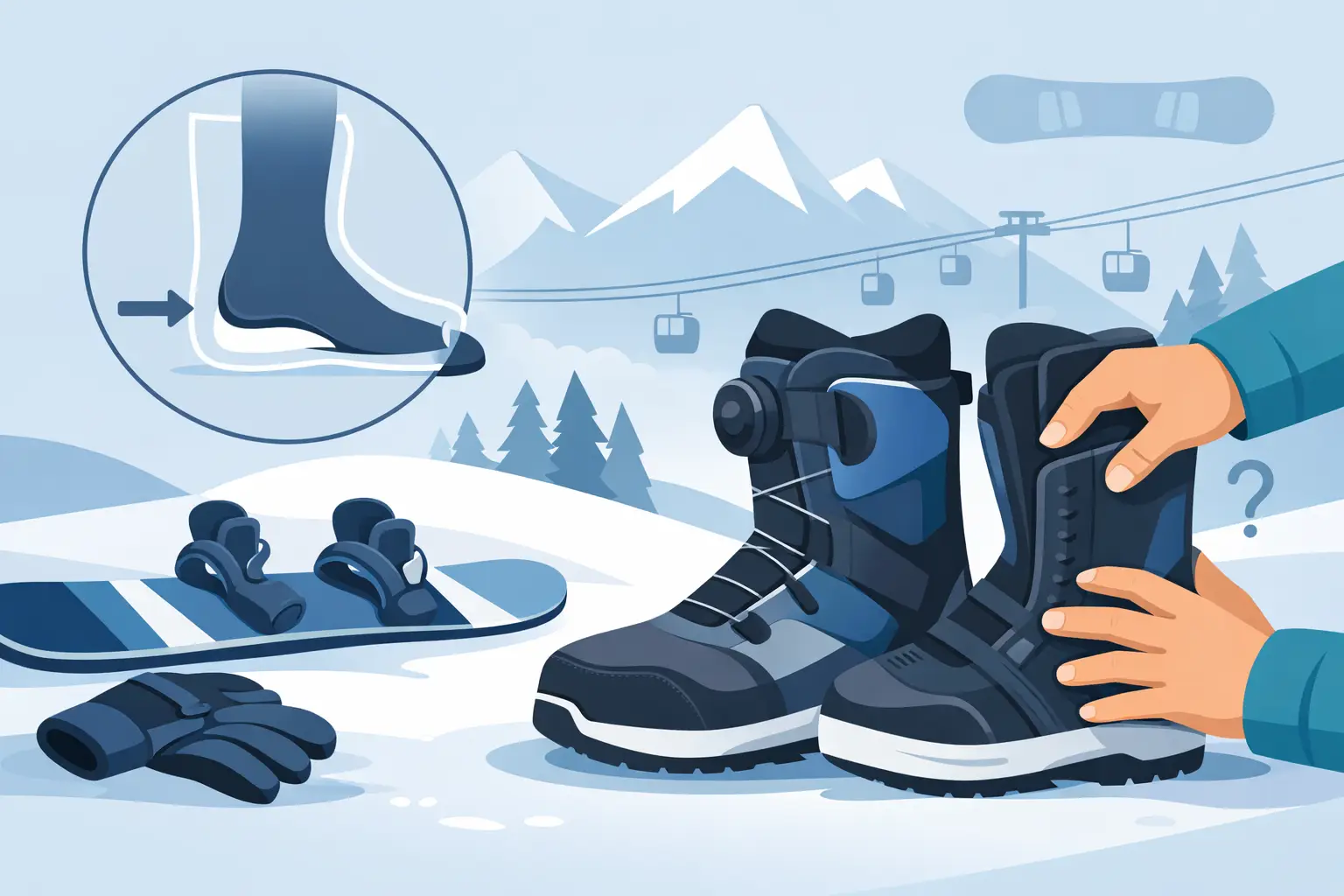
A great snowboard can feel ordinary in poorly fitted boots. Meanwhile, the right pair can make your first turns less intimidating, sharpen your edge control and keep you riding longer when the temperature drops. Knowing how to pick snowboard boots starts with one rule: fit comes before colour, brand or the deal on the shelf.
Snowboard boots connect your body to the board through the bindings, so they affect almost everything you do on snow. They need to hold your heel securely, support your riding style and stay comfortable through a full day of laps – not just the first two minutes in a shop.
How to pick snowboard boots: start with fit
Snowboard boots should feel snug from the first try-on. Your toes should lightly brush the end of the liner when you stand tall, then pull back just enough that they are not jammed when you flex forward into a riding stance. You should not have painful pressure points, numb toes or a heel that lifts every time you bend your knees.
Do not buy a bigger boot because it feels roomy and soft straight away. Boot liners pack out with use, often creating extra space around the heel and ankle after several days on snow. A boot that feels comfortably loose in store can become frustratingly sloppy by the middle of your trip.
Try boots on with the same snowboard socks you plan to wear. One pair of clean, purpose-built snow socks is plenty. Thick everyday socks can create pressure points and make your feet sweat, while wearing two pairs usually makes fit worse rather than warmer.
Spend time in each boot. Lace it properly, stand naturally, then flex forward repeatedly as if you are riding. Feel for heel lift, toe pressure and any hot spots around the ankle bones or across the top of the foot. If your toes stay crushed when you flex, the boot is probably too short. If your heel rises noticeably, try a different model or shape before simply tightening the laces harder.
Size is only the starting point
Snowboard boot sizing is commonly shown in US sizing and Mondopoint, which is based on foot length in centimetres. Mondopoint is a useful reference, but it is not a guarantee that every boot in the same marked size will fit identically. Brands use different lasts, and models can suit narrow heels, high insteps, wide forefeet or lower-volume feet differently.
Measure both feet while standing, ideally later in the day when they are at their largest. Use the longer foot as your guide. If you are between sizes, do not automatically go up. The better answer depends on toe room, shell shape and how the liner holds your heel once tightened.
Foot shape matters as much as length. Riders with a wide forefoot may find one brand immediately more comfortable, while someone with narrow ankles may need a liner and heel pocket that lock down more firmly. This is why trying several models is worth the effort. The best snowboard boot is not necessarily the highest-spec option – it is the one that fits your foot and supports the way you ride.
Choose a flex that suits your riding
Boot flex is how supportive and responsive a boot feels when you drive your shins forward or pressure the sides. Most brands rate flex on a scale from soft to stiff, but there is no universal standard. A medium boot from one brand can feel firmer than a medium boot from another, so use the rating as a guide rather than a rule.
Soft boots are forgiving, comfortable and easier to move in. They are a smart choice for beginners, park riders and anyone who enjoys a playful, surfy feel. They are also less demanding if you are still learning to link turns and manage pressure through your ankles.
Medium-flex boots are the all-mountain sweet spot for many Australian riders. They offer enough support for carving groomers, variable snow and a bit of speed, while staying comfortable for long resort days. If you want one setup for trips to Falls Creek, Hotham, Perisher or Japan, medium flex is often the sensible place to start.
Stiff boots deliver faster response and stronger support at speed. Advanced riders, aggressive carvers and people riding steeper terrain may prefer them, particularly with responsive bindings and a stiffer board. The trade-off is that they are less forgiving and can feel tiring or restrictive if you are still developing your technique.
Your weight, strength and binding setup also influence the choice. A heavier or more powerful rider may overpower a soft boot, while a lighter rider can find a stiff boot hard to flex. Think about the whole setup, not one piece of gear in isolation.
Pick a lacing system you will actually use
Traditional laces offer a familiar feel and let you adjust tension across different sections of the boot. You can keep the forefoot slightly looser and pull the upper cuff firmer, which suits riders with specific fit needs. They take longer to tie, especially with cold hands, but they are simple and easy to replace.
Speed-lace systems use pull handles to tighten zones quickly. They are popular for their convenience and can provide a secure fit without fiddling with knots. Check that the system gives enough adjustment where you need it, particularly around the ankle.
BOA systems use a dial and cable to tighten the boot. A single-dial boot is quick and clean, while dual-zone BOA models allow separate adjustment over the lower foot and upper cuff. They are brilliant for fast on-snow tweaks, but the feel is different from traditional laces. Make sure the cable layout does not create pressure across your foot.
There is no universally best system. A good boot with the right closure for your foot beats a fashionable lacing system that leaves your heel loose. Try each one while flexing into a riding position, not just while standing upright.
Pay attention to the liner and heel hold
The liner does much of the work when it comes to warmth, cushioning and heel retention. Many quality boots use heat-mouldable liners that can be shaped to your foot for a more personalised fit. Heat moulding can improve comfort and reduce small gaps, but it cannot fix a boot that is the wrong size or wrong shape from the beginning.
Look closely at heel hold. When you flex forward, a small amount of movement is normal, but your heel should not lift enough to create rubbing or delay your response to the board. Some boots include internal ankle harnesses, J-bars or other retention features to help secure the heel. These can be excellent for riders with narrow heels, though they should never cause sharp pressure.
Warmth is useful, particularly on cold overseas trips, but avoid choosing a boot purely because it feels heavily padded. A well-fitted boot keeps your feet warmer than a loose boot because it limits movement and lets your socks manage moisture properly. If your feet tend to run cold, focus on fit first, then pair the boots with quality socks and appropriate outerwear.
Make sure boots and bindings work together
Your snowboard boots must fit properly inside your bindings. The boot should sit centred on the footbed, with the toe and heel straps able to tighten securely without sitting awkwardly on the edge of the boot. A bulky boot can create toe or heel drag on a narrow board, especially if you have larger feet or ride lower binding angles.
If you are buying a complete setup, bring your boots along when checking bindings and board width. This is the easiest way to avoid surprises once you are at the resort. A specialist can also help match boot flex to bindings, so your setup feels balanced rather than overly soft in one area and overly stiff in another.
Do not rush the final decision
A snowboard boot should feel secure and supportive, not instantly slipper-like. Walk around, flex it, sit down and stand back up. If a shop allows it, keep each pair on for several minutes before deciding. The first boot that feels soft may not be the boot that performs best after a week of riding.
At Mac’s, riders can try on a broad range with advice from people who understand snow gear, rather than guessing from a size chart alone. That matters when you are investing in equipment that will shape every day you spend on the mountain.
Once you find a pair with a snug heel, light toe contact, no pressure points and a flex that matches your riding, give them a proper break-in before your biggest trip. Wear them around home for short periods, practise tightening the lacing system and head to the snow knowing your boots are ready to work as hard as you do.
