


Kneeboard vs Wakeboard Difference Explained
01 August 2026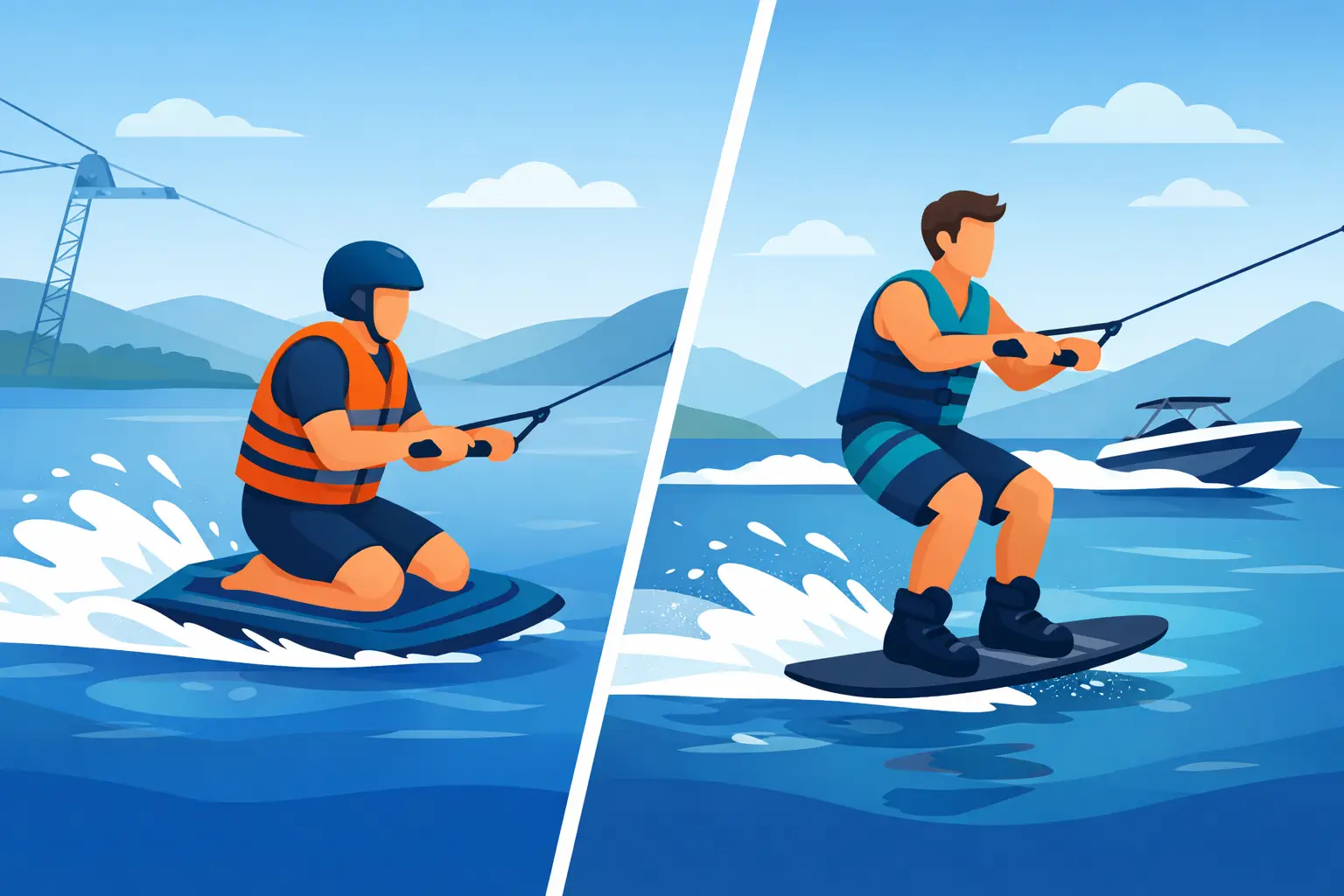
A kneeboard lets a first-timer get up, turn and laugh within a few passes. A wakeboard asks more from your balance but opens the door to bigger edging, wake jumps and a long progression path. That is the real kneeboard vs wakeboard difference: one is a fast, confidence-building entry into tow sports, while the other is a stand-up riding discipline with more technical depth.
Both are brilliant behind the boat. The right choice comes down to who is riding, what kind of session you want, and whether the goal is easy family fun or learning to charge the wake.
Kneeboard vs wakeboard difference at a glance
The obvious difference is body position. On a kneeboard, you ride on your knees with a padded deck supporting your shins and a strap securing your thighs. On a wakeboard, you stand sideways with both feet fixed into bindings, similar to a snowboard.
That one change affects almost everything. A kneeboard has a low centre of gravity, so it feels stable at slower speeds and is easier to recover when the boat driver’s throttle is not perfectly smooth. A wakeboard requires you to balance over your feet, hold an edge and manage the pull of the rope without being pulled upright too early.
Kneeboards are generally wider and more buoyant through the middle. They plane quickly, making deep-water starts forgiving. Wakeboards use a shaped base, fins, rocker and edges to create grip, release and pop off the wake. Their performance comes from rider input, which is exactly why they are so rewarding once the basics click.
Which is easier to learn?
For most beginners, the kneeboard wins. A rider can begin in the water with the board in front of them, let the boat take up the slack, then slide onto the deck as it planes. There is less coordination required than standing up on a wakeboard, and falling usually feels less intimidating because you are already close to the water.
This makes kneeboarding a top choice for kids, families with a mixed-age crew and anyone who wants plenty of turns in a single afternoon. It is also a great confidence builder for riders who are unsure about wakeboarding but still want the buzz of being towed behind a boat.
Wakeboarding has a steeper first session. Beginners commonly try to stand too soon, bend at the waist, or point the board straight at the boat. A successful start is more about sitting low, keeping the handle close and allowing the boat to do the work before gradually standing. Once up, a new rider must learn to ride heel-side and toe-side, cross the wake with a controlled edge and fall safely.
That does not mean wakeboarding is only for advanced athletes. With calm water, a patient driver and correctly fitted bindings, plenty of first-timers get riding on day one. It just demands more persistence than a kneeboard.
Speed, control and the feel on the water
Kneeboards are usually ridden at slower speeds than wakeboards. The exact speed depends on the rider’s size, the board shape and water conditions, but a comfortable kneeboard pace often sits around 25 to 35 km/h. Slower speeds keep the ride manageable and reduce the sting of a fall.
Wakeboard speeds commonly start around 26 to 32 km/h for beginners and move upward as riders gain experience. Bigger riders, longer lines and more advanced wake riding can call for more speed, though faster is not automatically better. The best speed is the one that gives the rider a clean, predictable wake and enough control to edge without being overpowered.
The ride itself feels different. Kneeboarding is direct and playful. You can carve, spin the board on the surface, cross the wake and learn one-handed riding relatively quickly. A board with a hook, a retractable start assist fitted to the front, can make getting up even simpler for new riders.
Wakeboarding feels more like carving on snow or skating across water. You build line tension by edging away from the wake, then release that energy as you ride up the wake face. Even a small wake jump feels huge when you are learning it, and there is always another skill to chase: switch riding, grabs, surface tricks, 180s, inverts and cleaner air tricks.
Tricks and progression
A kneeboard is not just a beginner toy. Skilled kneeboarders can throw surface spins, wake jumps, grabs and aerial rotations. The low stance makes certain rotational tricks approachable, and riders can progress quickly when they are comfortable carving and controlling the handle.
Still, wakeboarding has the broader performance ceiling. Standing on a board gives you more leverage through your legs, more ways to use the wake and a larger catalogue of tricks. The board’s rocker profile also matters: a continuous rocker creates a smoother, more predictable trajectory, while a three-stage rocker delivers a more vertical pop off the wake.
If a rider wants a casual towable that everyone can share, a kneeboard is often the better buy. If they are already watching wake clips, asking about bindings or spending every spare minute trying to clear the wake, start them on a wakeboard. Buying for where they want to go, not only where they are today, can save an upgrade later.
Gear you need for each sport
The essentials overlap. Both sports need a suitable boat or towing setup, an approved ski vest, a tow rope and calm, open water. Every rider should wear a properly fitted personal flotation device, and the boat should have an attentive driver plus an observer where required by local rules.
The board-specific gear is where the setups separate:
- A kneeboard needs a secure, comfortable kneepad and an adjustable strap that holds the rider in place without restricting circulation.
- A wakeboard needs bindings matched to the rider’s foot size and ability level. Softer open-toe bindings suit shared family boards, while closed-toe boots offer a more precise fit for dedicated riders.
- Kneeboard ropes are commonly shorter and simpler, while wakeboard ropes are designed to provide low stretch and consistent pull for edging and wake tricks.
- Wakeboard sizing is based largely on rider weight, with riding style and boat wake also playing a part. Kneeboard selection is less technical, but deck comfort, strap quality and board shape still make a noticeable difference.
Avoid treating the rope as an afterthought. A tired, stretched or damaged rope can make starts inconsistent and creates a safety risk. Check the handle grip, main line and connection points before every session.
Choosing for kids, adults and families
For younger kids, a kneeboard is hard to beat. It provides quick wins, lets them build water confidence and is easier for adults to help with from the swim platform. Look for a stable board with generous padding and an adjustable strap, then keep the speed low until they are relaxed and asking for more.
For teenagers, the choice depends on personality. A rider who wants instant fun with mates may get more out of a kneeboard straight away. A rider drawn to snowboarding, skateboarding or surf-style sports will often love wakeboarding’s sideways stance and technical challenge.
Adults should not assume they have missed the wakeboarding window. Plenty of adults learn successfully, especially if they have board-sports experience. But if the aim is to get everyone riding with minimal frustration on a weekend away, a quality kneeboard is a smart piece of gear to have in the boat.
Families often end up with both. The kneeboard keeps the session moving when younger riders want turns, while the wakeboard gives progressing riders a reason to stay on the water until sunset. That is not overkill if your crew genuinely uses both, but it is worth buying the board that will get the most water time first.
Set up for a better first ride
Whichever board you choose, start in protected water away from traffic, ramps, swimmers and shallow hazards. Use clear hand signals, agree on the plan before the rider enters the water and keep the first few passes short. A steady pull is more useful than a hard launch.
For kneeboarding, encourage the rider to stay compact, keep both hands on the handle and look ahead rather than down at the board. For wakeboarding, set the bindings to a comfortable stance, usually with a slight duck angle for beginners, and remind the rider to let the boat pull them up instead of fighting to stand immediately.
A well-chosen board makes the learning curve far more enjoyable. If you are comparing shapes, sizes or bindings, the water-sports crew at Mac’s can help match the setup to your rider, boat and budget. Pick the board that gets you keen to take the next set, then get out there while the water is glassy.
