


Surf Skate vs Skateboard: Which Should You Ride?
02 August 2026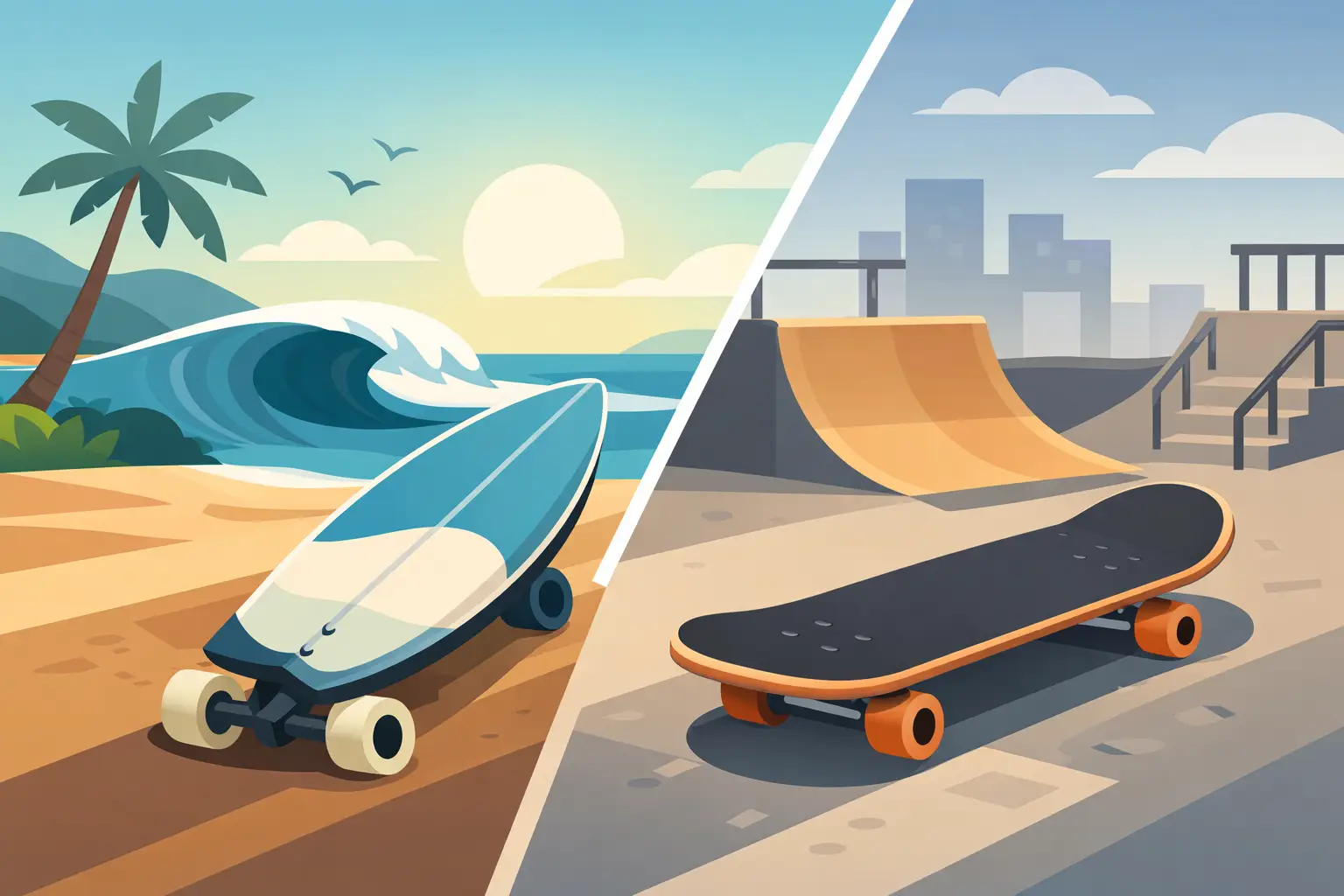
A clean bank at the skatepark can feel completely different depending on what is beneath your feet. On a surf skate, you can drive through a deep carve and generate speed without pushing. On a regular skateboard, that same bank becomes a chance to pump, slash, grind or take to the air. That is the real surf skate vs skateboard question: not which one is better, but which style of riding gets you more excited to roll out.
Both boards belong in the skate world, and both are brilliant for getting around, learning balance and having a good time on wheels. Their hardware, ride feel and ideal terrain are very different, though. Choosing the right setup means you are far more likely to progress quickly instead of fighting a board that does not suit how you want to ride.
Surf skate vs skateboard: the key difference
A surf skate is designed to recreate the flowing feel of surfing on pavement. Its defining feature is the front truck system, which has a much wider turning range than a standard skateboard truck. Depending on the design, it may use a spring, bushing or swivel-style adapter to create a loose, responsive front end.
That extra movement lets you make tight, drawn-out turns, lean hard into carves and generate momentum by pumping your body from side to side. It is less about pushing along the footpath and more about linking turns. If you surf, it can be a fun way to practise looking through turns, shifting weight and using your shoulders and hips to guide the board when the swell is flat.
A traditional skateboard uses two standard trucks, typically with a kingpin, bushings and a more stable steering response. It turns when you lean, but it is built to stay predictable under ollies, kickflips, grinds, slides and landings. The deck normally has a pronounced nose and tail, while a surf skate deck often has a wider outline and a flatter, more cruiser-like shape.
Neither setup is automatically more difficult. They simply ask different things of the rider. A surf skate rewards smooth weight transfer and committed carving. A skateboard rewards board control, balance over the bolts and the repetition needed to learn tricks.
How each board feels under your feet
The first few minutes tell most riders what they need to know. A surf skate feels lively from the moment you step on. Small movements can create a turn, especially with a loose front truck. You can stand fairly upright, compress into a carve, extend out of it and carry speed into the next turn. On a gentle slope, that sensation can be seriously addictive.
The trade-off is stability. The same responsive steering that makes a surf skate so much fun can feel twitchy for someone who has never ridden before. A powerful carve also demands space. Trying to surf skate through a busy shared path, tight pedestrian area or crowded park is not much fun for anyone.
A standard skateboard generally feels more centred and stable, particularly with trucks set to a sensible tightness. You push with one foot, place both feet over the bolts and roll in a straight line with confidence. It may take more effort to make very tight turns, but the board gives you a solid base for learning to ride ramps, roll off kerbs, drop in and eventually work on tricks.
Wheel size changes the feel too. Surf skates commonly run larger, softer wheels that smooth out rough concrete and grip hard through carves. Street skateboards usually use smaller, harder wheels that slide more easily and feel fast on smooth skatepark concrete. Hard wheels can be harsh on rough asphalt, while soft wheels make technical flip tricks and slides less crisp.
Turning and pumping: where surf skates shine
If your goal is carving, a surf skate has the clear advantage. The front truck lets the board turn sharply at slower speeds, so you can make flowing S-turns on a flat basketball court, gentle hill or open stretch of smooth pavement. Once you understand pumping, you can maintain momentum without putting a foot down as often.
Pumping is not simply wiggling the board. Start by bending your knees as you enter a turn, then extend through the exit while shifting pressure from rail to rail. Keep your head up and look where you want to go. The movement is rhythmic, and forcing it with big upper-body swings usually makes the board less controlled.
Surf skates are also heaps of fun in bowls, mellow transitions and on small banks. Their turning radius encourages long lines, cutbacks and high carves. For surfers, that can make a session feel familiar. For non-surfers, it is still one of the most enjoyable ways to build confidence with edges and transitions.
A skateboard can also pump in a bowl or ramp, but its pumping comes more from using the transition and timing your compression at the right points. It is a skill with a different purpose: carrying speed for airs, grinds, transfers and bigger lines rather than simulating a surf turn.
Tricks, skateparks and technical riding
For ollies, flip tricks and rail grinds, choose a standard skateboard. A popsicle-shaped street deck has a usable nose and tail, medium-sized wheels and trucks built to take repeated impacts. The platform is stable enough to practise an ollie hundreds of times, then build into shuvits, kickflips and grinds as your confidence grows.
A surf skate can roll around a skatepark and carve transitions, but it is not the first choice for technical tricks. Its loose steering can make it harder to set up square for an ollie or land consistently after a jump. Larger soft wheels also have more grip, which is great for carving but less useful when you want to slide a ledge or spin the board beneath your feet.
That does not mean surf skates are limited to beginners or cruisy riders. Experienced riders can use them to make a familiar park feel fresh, finding carving lines between ramps and generating speed in places where a standard board needs a push. Just be realistic about the job each board is built to do.
Can you learn to skateboard on a surf skate?
You can learn core balance, stance, turning and confidence on any board. A surf skate will teach you to be relaxed while moving and to use your body well through turns. Those are useful skills.
However, it will not directly prepare you for the mechanics of pushing, ollieing or landing tricks on a standard skateboard. If street skating or skatepark progression is the aim, start on a skateboard. If carving is the whole point and tricks are not on the agenda, start on a surf skate.
Choosing the right setup for your riding
Think about where you will ride most weekends, not just the coolest clip you have watched online. An open car park, smooth school court or quiet path suits a surf skate. A local skatepark, ledges, rails and bowls point towards a skateboard, although bowls can suit either board depending on the style of session you want.
Deck width matters. Wider decks offer more room for your feet and often feel reassuring for beginners, larger riders and surf-style carving. Narrower skateboard decks are lighter and easier to flick for technical tricks. There is no magic width, but a board should feel proportional to your shoe size and riding goals rather than chosen solely for its graphics.
For a surf skate, pay close attention to the front truck system and wheel softness. A highly responsive setup is exciting, but a slightly more controlled model can be a better first board for younger riders or anyone still finding their balance. For a skateboard, look for quality trucks, properly matched wheel hardness and a complete that is intended for real riding, not a department-store toy board.
Protection is part of the setup, especially while learning. A certified helmet is non-negotiable, and knee pads, elbow pads and wrist guards can save a session when you are practising on concrete. Surf skates can surprise new riders with how fast they turn, while a first drop-in on a skateboard can go wrong quickly. Wear the gear and give yourself room to learn.
One board or both?
Plenty of riders end up with both because they serve different moods. A surf skate is the board you grab for a quick carve after work, a warm-up before a surf or a relaxed roll with mates. A skateboard is the board for trick sessions, skatepark laps and the satisfaction of finally landing something you have been working on for weeks.
If you can only buy one, let your preferred riding style decide. Choose a surf skate if you want smooth carves, pumping and surf-inspired flow. Choose a skateboard if you want tricks, park riding and a versatile platform that rewards technical progression. At Mac’s, the right board is the one that gets used often, not the one that spends its weekends leaning against the garage wall.
Start with the terrain you have nearby, wear your helmet, and choose the setup that makes you want to head out for one more lap.
