


What Size Snowboard Do I Need? Find Your Fit
21 July 2026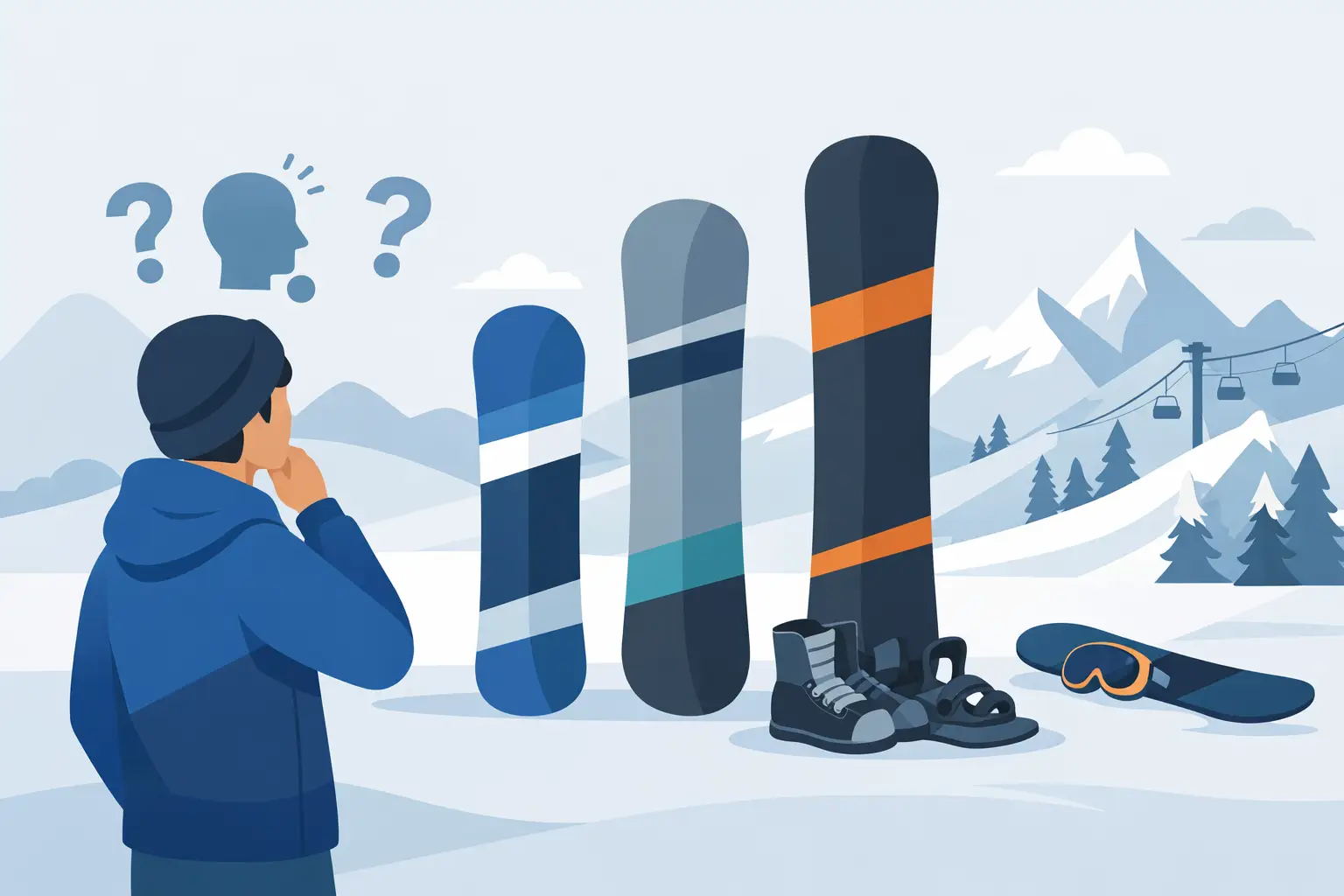
A board that is too short can feel twitchy at speed. One that is too long can feel like hard work every time you try to turn. If you are asking, “what size snowboard do I need?”, the best answer is not simply the board that reaches your chin. Your weight, boot size, ability and the way you want to ride all matter more than that old-school shortcut.
Getting the fit right gives you a board that turns when you ask it to, stays composed when the snow gets chopped up, and gives you room to progress. Whether this is your first trip to Mt Buller or you are chasing powder in Japan, use the brand’s sizing chart as your starting point, then narrow it down with the details below.
What size snowboard do I need for my weight?
Weight is the key number when choosing snowboard length. Every snowboard is designed to flex under a certain rider load. If you are lighter than the recommended range, the board may feel stiff and difficult to control. If you are heavier than the range, it can feel soft, unstable and less supportive through turns and landings.
Start by finding your weight on the sizing chart for the exact board you are considering. Board lengths are shown in centimetres, such as 149, 153 or 158. A rider who weighs 65 kg might suit a 151 to 154 cm all-mountain board, while a rider around 85 kg may be better on a 157 to 161 cm option. Those are broad examples only – the chart for the specific model always wins.
Height is still useful, particularly when two lengths both suit your weight. A taller rider may prefer the longer option for a little more stability, while a shorter rider may find the smaller option easier to move around. But do not choose by height alone. Two people of the same height can be 20 kg apart, and they should not automatically ride the same board.
Choose snowboard length for how you ride
Once you are within the right weight range, riding style helps you choose between sizes. A shorter board is generally easier to pivot, press and steer at slower speeds. A longer board offers more edge hold, float and stability when you are riding fast.
First snowboard and all-mountain riding
For most beginners and progressing riders, an all-mountain snowboard around the middle of the recommended size range is the smart call. It will handle groomed runs, uneven afternoon snow and the occasional lap through the park without feeling overly specialised.
If you are deciding between two sizes, choose the shorter option if you are new, prefer slower cruisy turns, or want a board that feels easy to manoeuvre. Choose the longer option if you are a confident rider, enjoy speed, or want extra support on steeper terrain.
Park and freestyle boards
Freestyle riders often size down slightly, provided they remain within the board’s stated weight range. A shorter twin board spins more easily, feels less cumbersome on rails and makes buttering more accessible. It is not a rule that every park rider needs a short board, though. Bigger riders still need enough length and flex to support their weight.
A true twin shape with a centred stance is a great fit for riders who want to ride regular and switch, hit jumps, and spend plenty of time in the terrain park. Look at the model’s intended use as well as its length. A 154 cm soft park board and a 154 cm directional freeride board can feel completely different underfoot.
Powder, freeride and fast carving
For deep snow, steep runs and high-speed carving, many riders go longer. Extra surface area helps the board stay higher in powder, while a longer effective edge adds confidence when the piste is firm and fast.
Directional powder boards are the exception to the simple longer-is-better idea. Many have a longer nose, a set-back stance and more taper, so they can be ridden shorter than a traditional all-mountain board. If a powder board’s sizing chart says a 154 suits your weight, trust the design rather than buying a 160 just because you want more float.
Snowboard width matters as much as length
The right length will not help much if your boots hang too far over the edges. Snowboard width is usually measured at the waist, the narrowest point of the board. Your boots should sit securely over the edges without excessive toe or heel overhang.
As a general guide, riders with a men’s US boot size around 10.5 or above should check wide snowboard options. But boot shape, binding angle and stance width all affect the result, so do not buy a wide board on boot size alone. Modern snowboard boots can vary significantly in their outer footprint.
Too much overhang can cause toe or heel drag when you lean deeply into a carve. A board that is unnecessarily wide can be slower edge to edge, particularly for lighter riders. The goal is a balanced setup: enough width for clean carving, without making the board feel slow or clumsy.
If you ride with a higher binding angle, such as +15 degrees on the front foot, you may have more room to use a regular-width board. Riders with flatter angles, larger boots or a love of hard carving often benefit from a wide model. It is worth setting your boots in the bindings before you remove any tags or protective packaging.
Flex and profile change the feel
Size charts get you into the right zone, but flex and board profile decide how that board behaves on snow. A soft-flex board is forgiving, playful and easier for beginners to bend into turns. It suits park laps, slower-speed riding and anyone who values an easy-going feel.
A medium flex is the all-mountain sweet spot for many Australian riders. It balances control and forgiveness across groomers, icy patches and variable conditions. Stiffer boards are more responsive and stable at speed, but demand better technique and more effort to manoeuvre.
Camber also matters. Traditional camber provides strong edge hold and pop, while rocker makes turn initiation easier and adds float in soft snow. Hybrid profiles combine elements of both, which is why they are so popular for one-board quivers. A shorter, stiff camber board may feel more serious than a slightly longer, softer hybrid board, so never assess length in isolation.
Do not forget your bindings and boots
Your snowboard is only one part of the setup. Bindings need to match both your boot size and your riding style, and your boots should be firm around the heel with toes that just brush the end when standing upright. Once you bend your knees into a riding stance, your toes should pull back slightly.
A poorly fitted boot can ruin a great board choice. Heel lift means less response, cold feet make every run shorter, and oversized boots can create width problems that were never really about the board. Prioritise boot fit first, then choose bindings that suit your boot size and flex preference.
For younger riders, avoid sizing up too aggressively in the hope they will grow into the setup. A board that is too long or stiff can make learning frustrating. Choose a youth board that suits their current weight, and make sure the bindings properly hold their boots. Progress comes faster when kids can control their gear.
A quick way to narrow down your size
Before choosing a board, have four details ready: your weight in kilograms, boot size, current ability and where you spend most of your time riding. Then use the model-specific chart to identify suitable lengths. From there, go shorter for playful freestyle and easier turning, or longer for stability, speed and freeride performance.
If you sit right between two sizes, think honestly about your riding rather than where you would like to be in two seasons. A forgiving all-mountain board you enjoy riding now will help you progress more than a big, aggressive deck that spends the trip fighting you.
Mac’s has been helping Australians get set up for the snow since 1978, with specialist advice, quality snowboards, boots and bindings from the best brands. Bring in your boots or chat through your riding plans before you buy. The right board is not the biggest one on the rack – it is the one that makes you want to take one more run.
