


How to Choose Water Skis for Your Riding Style
13 July 2026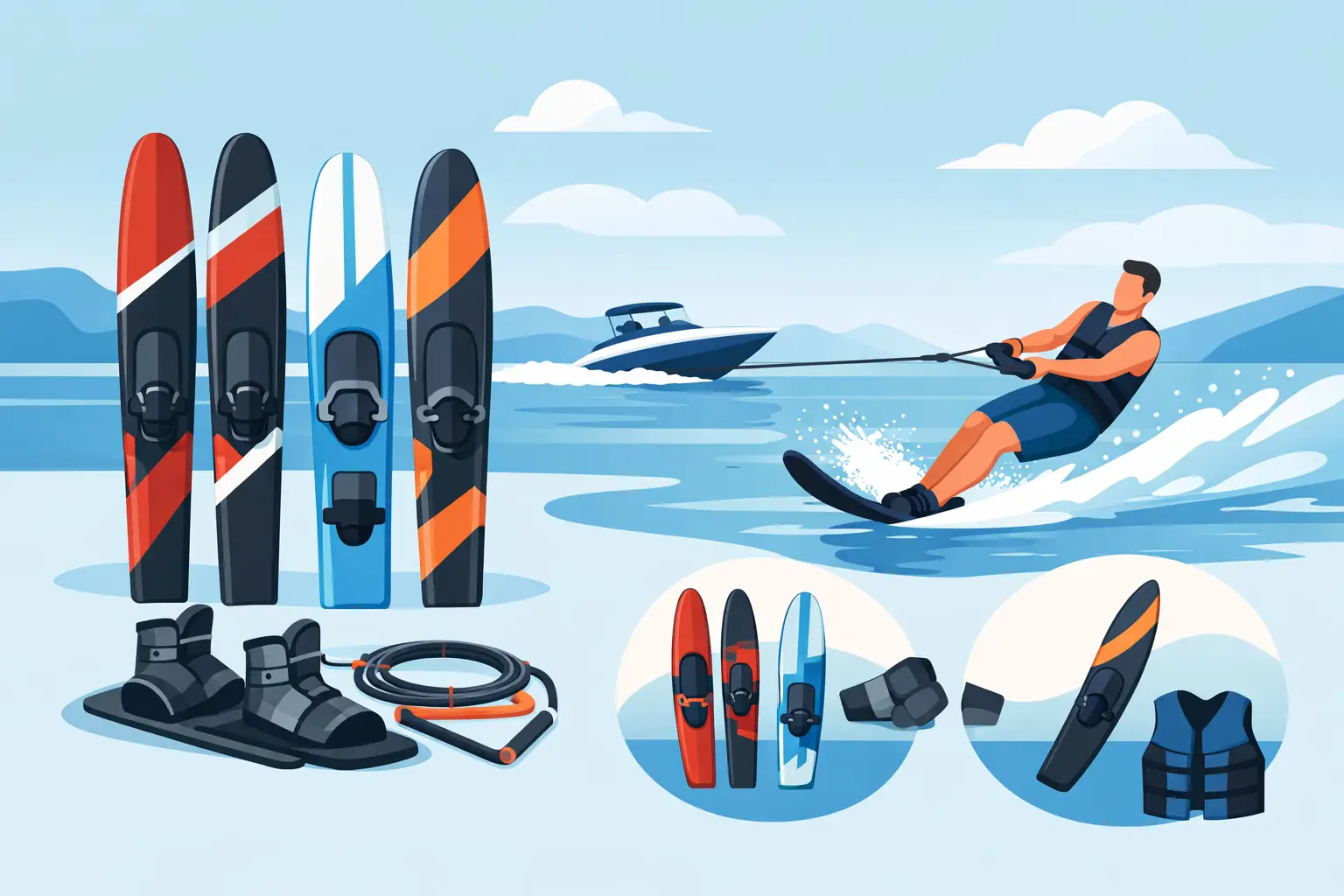
A great first set of skis makes getting up behind the boat feel achievable. The wrong set can turn a fun summer session into a frustrating battle with spray, sore arms and repeated starts. Knowing how to choose water skis comes down to matching the ski to the rider, the boat and the type of skiing you actually want to do.
For most Australian families, a stable combo ski package is the smart place to start. For skiers chasing harder cuts, cleaner wakes and slalom turns, a dedicated single ski will make far more sense. Get the fundamentals right first and your gear will keep up as your confidence grows.
Choose water skis by the way you want to ride
Before looking at graphics, brands or package prices, think honestly about who will be using the skis. A pair used for occasional laps at the river by kids, parents and first-timers needs to be forgiving and versatile. A skier who is already dropping a ski and wants to carve will benefit from a more performance-focused shape.
Combo skis for beginners and family boating
Combo skis are the classic two-ski setup. They offer a broad, stable platform for deep-water starts and are ideal for learners, kids and recreational skiers. Most include an adjustable binding system designed to fit a range of foot sizes, which is handy when one set needs to work for the whole crew.
Many combo skis also have a rear toe piece on one ski. This lets an advancing skier remove one ski and try slalom skiing without buying a separate setup straight away. It is a practical progression path, although a combo ski used as a single will not feel as responsive as a purpose-built slalom ski.
Look for trainer bars if you are teaching younger children. These bars connect the front of the skis, helping keep them parallel during starts and reducing the chance of the tips crossing. They are a simple confidence-builder when learning the basics.
Slalom skis for carving and progression
A slalom ski is made for riding on one ski. It is the right choice for skiers who are comfortable with deep-water starts, can cross the wake with control and want to make stronger, more deliberate turns.
Slalom skis come in different widths and performance levels. A wider ski is generally easier to get up on and carries speed well at slower boat speeds, making it a strong option for recreational skiing, larger riders and boat crews that are not running tournament-level speeds. Narrower, higher-performance skis are quicker edge to edge and offer more precision, but demand better technique and a consistent pull from the boat.
If your goal is enjoyable open-water carving rather than course skiing, do not assume the most aggressive ski is the best ski. A stable, wider recreational slalom model can deliver more fun on a choppy lake or busy river than a highly tuned competition shape.
Get the water ski size right
Water ski length is not just about height. Rider weight, boat speed, ability and ski shape all matter. As a general rule, heavier riders need more surface area to plane easily, while lighter riders can use a shorter ski. Bigger skiers should not be forced onto a short, advanced-looking model just because it is what someone else rides.
For combo skis, sizing is usually broad and straightforward. Junior lengths suit children, while adult combos often suit a wide range of riders. Check the manufacturer’s rider-weight chart before buying, especially for a child who is between sizes or an adult at the upper end of a recommended range.
Slalom sizing needs a little more attention. Traditional slalom skis are commonly measured in inches, while wider skis may use a different sizing approach depending on the brand. Start with the manufacturer’s chart, then consider the speed your boat normally runs. A skier riding at 45 to 50 km/h may prefer more surface area than someone regularly skiing faster.
For growing kids, avoid sizing too far ahead. Oversized skis can be difficult to control, while a ski that is right for their current weight gives them a better chance to learn good habits. If several children will share the skis, choose the size that best serves the most frequent rider rather than trying to cover every possible weight range.
Match the shape to your boat and water conditions
Your boat setup has a bigger influence on ski choice than many people expect. A smaller runabout with modest pulling power, or a boat usually loaded with mates and gear, benefits from skis that get on the plane easily. Wider combos and wide-body slalom skis reduce the effort needed to get up and keep moving.
Boat speed matters too. Beginners often learn best at a controlled, moderate speed, rather than being pulled too fast in the hope it will make starts easier. A ski with plenty of surface area supports this approach. As skill improves, speed can increase gradually while the skier learns to edge, cross the wake and turn safely.
Think about where you ski. Glassy morning water is brilliant for nearly any setup, but most recreational sessions involve some chop, boat wake and changing conditions. A forgiving ski with predictable tracking is often the better choice for general use on Australian rivers, dams and coastal waterways.
Bindings should feel secure, not restrictive
Bindings connect you to the ski, so fit matters. On combo skis, adjustable front bindings are popular because they accommodate multiple shoe sizes. Make sure the adjustment system is easy to use, holds the foot firmly and does not leave excessive movement around the heel.
On a slalom ski, you may choose a standard adjustable binding, a more supportive performance binding, or a front-and-rear binding setup. A rear toe piece offers freedom of movement and is common for recreational slalom skiers. A full rear boot provides a more connected feel and greater control, but it is less forgiving and suits skiers with solid technique.
A binding should be snug enough that your foot does not slide around under load, without causing pressure points or numbness. Always use ski bindings designed to release appropriately in a fall. Never modify bindings to make them tighter or harder to release.
Do not overlook the fin, rocker and base design
You do not need to become a ski technician to make a good buying decision, but a few design basics help explain why skis ride differently. The rocker is the curve running from tip to tail. More rocker can help a ski turn, while a flatter profile often promotes speed and stability.
The fin underneath the ski affects tracking and turning. A larger or more prominent fin can feel stable and secure, while performance fin setups allow experienced skiers to tune how the ski engages through a turn. For most recreational skiers, the factory setting is the right setting. Focus on improving your stance before reaching for fin adjustments.
Base channels and concaves can also guide water flow and add grip. These features are useful, but they should not outweigh the basics of choosing the correct ski size, width and binding fit.
Buy the gear around the skis as well
Water skis are only part of a safe, enjoyable setup. A quality ski rope with a proper handle gives the skier a predictable pull and is far better than using an old tow rope of unknown condition. Check the rope regularly for fraying, knots and damaged sections.
Every skier needs a properly fitted, approved ski vest. The vest should stay secure in the water without riding up around the chin, and it must suit the wearer’s weight and chest size. A bright colour can also make it easier to spot a skier in changing light or busy water.
For a family setup, it is worth having a dedicated beginner rope, trainer bar if needed, and a safe storage solution that keeps skis out of direct sun and away from sharp objects in the boat. Rinse gear with fresh water after use, particularly after saltwater sessions, and let it dry before packing it away.
Get expert advice before committing
The best water ski is not necessarily the most expensive one or the one with the loudest graphics. It is the ski that gets the rider out of the water confidently, feels stable at your usual boat speed and leaves room to improve. If you are buying for a family, tell a specialist the ages, weights and experience levels of the people who will use it, plus the type of boat you tow with.
At Mac’s, the goal is to get you on the right gear from the start, whether that means a forgiving combo package for summer holidays or a performance slalom ski for chasing cleaner turns. Bring your questions, choose the setup that suits the sessions you will actually have, and get out there while the water is glassy.
