


Snowboard vs Skis for Beginners
07 July 2026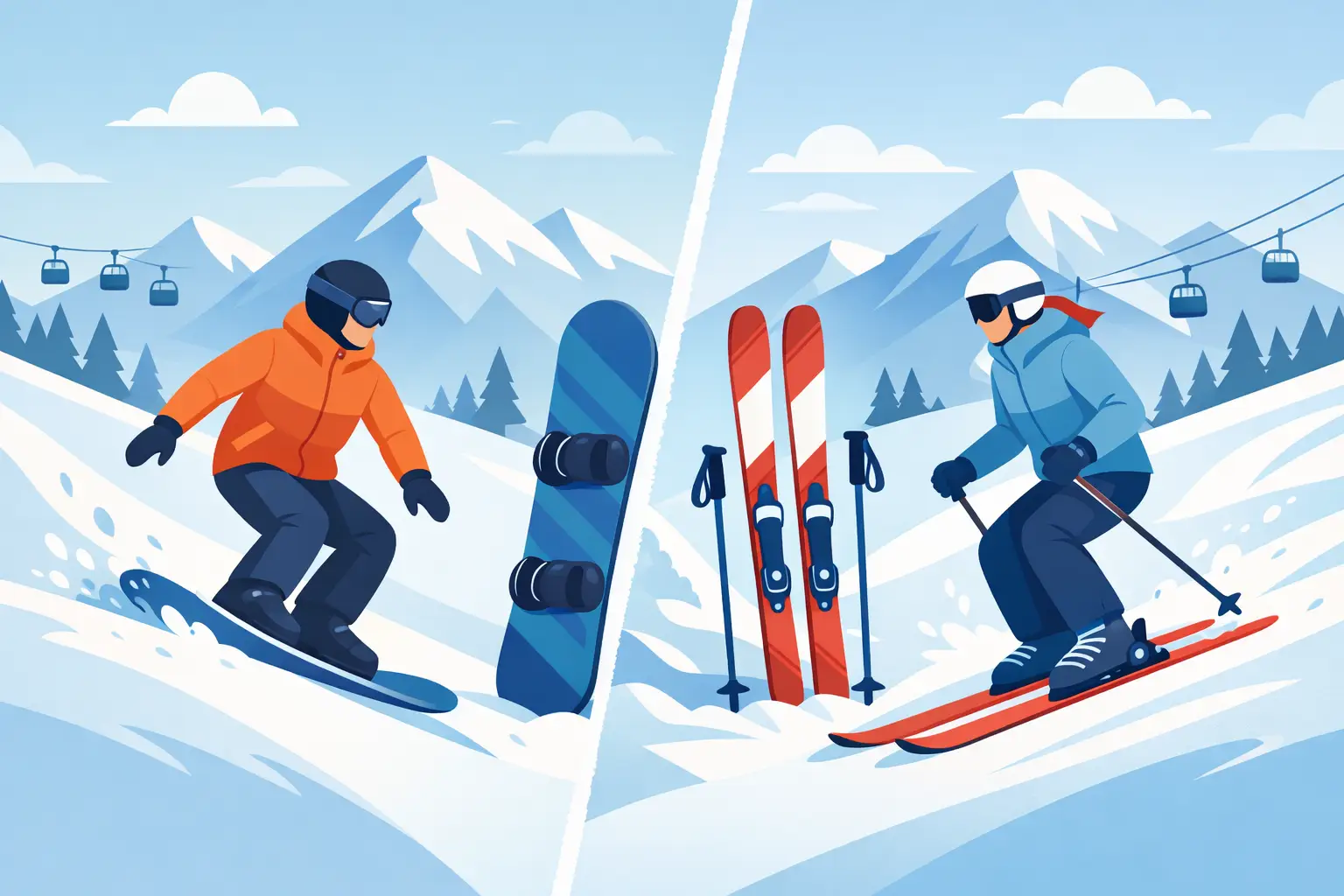
That first snow trip usually starts the same way – you’re staring at the mountain, rental counter or gear wall wondering whether you’ll have more fun on one board or two. If you’re weighing up snowboard vs skis beginners questions, the right answer is less about hype and more about how you want to learn, fall, turn and improve over your first few days on snow.
For some people, snowboarding clicks fast and feels natural by the end of day two. For others, skiing is the easier path because it offers more stability early and a less brutal learning curve in the first few hours. The trick is knowing where each option suits your body, your goals and the kind of riding you actually want to do.
Snowboard vs skis beginners: what feels easier at the start?
If we’re talking about the first morning on snow, skis usually win. You’ve got one ski on each foot, which makes standing flat, shuffling around and moving on gentle terrain feel more intuitive for most beginners. Plenty of first-timers can pick up the basics of sliding, stopping and turning on beginner runs without feeling completely out of control.
Snowboarding tends to be tougher on day one. Both feet are locked to the same board, which is great once you’re moving properly, but awkward when you’re learning to balance edge to edge. Most beginners spend a fair bit of time on their backside or knees early on. That part is real, and there’s no point pretending otherwise.
But here’s the trade-off. While skiing often feels easier at first, snowboarding can feel smoother once the fundamentals click. Many riders go through a rough first day, then come back on day two and suddenly start linking turns. So if your definition of easier is “less frustrating in the first few hours”, skis are usually the safer bet. If your definition is “worth pushing through because it may feel great once I get it”, snowboarding has a strong case.
Which is easier to learn long term?
This is where the answer gets more interesting. Skiing is generally easier to start and harder to master cleanly. Snowboarding is often harder to start and easier to progress once you’ve got the basics.
With skis, you can get around beginner terrain fairly quickly, but refining your technique takes time. Parallel turns, control at speed and confidence on steeper runs all require proper skill development. A lot of skiers plateau because they can survive the run without truly improving.
With a snowboard, the first hurdle is bigger. Falling leaf, heel edge, toe edge and linking turns can test your patience. But after that, many beginners feel a steady jump in confidence. Once edge control starts making sense, cruising groomers can feel surprisingly natural.
That doesn’t mean snowboarding is objectively better to learn. It means the timeline is different. Skiing often gives you earlier wins. Snowboarding often rewards persistence.
Snowboard vs skis for beginners by body feel
The physical feel of each sport matters more than people think. Skiing usually spreads the workload more evenly across both legs, and many beginners find it less punishing on the upper body because they’re not constantly catching themselves in a fall.
Snowboarding, on the other hand, can be rough on wrists, knees, tailbone and shoulders during those first sessions. If you hate falling, or you’re heading up for a short trip and want to spend as much time upright as possible, skis may be the better call.
Then again, some people find snowboarding easier on the knees once they’re riding properly, because both feet stay fixed in one direction rather than twisting independently. If you’ve skated, surfed or wakeboarded before, the sideways stance can also feel much more familiar. That background can make a massive difference.
A simple way to think about it is this: if you prefer facing forward and having each leg work independently, start with skis. If you’re already comfortable with board sports and the idea of a sideways stance feels natural, a snowboard may suit you better.
What background gives you an advantage?
Your other sports can give away the answer pretty quickly. If you’ve spent time skateboarding, longboarding, surfing or wakeboarding, snowboarding often feels more intuitive. The stance, edging and body position won’t be completely foreign, even if snow is its own thing.
If you’ve ice skated, rollerbladed or played sports where balance over each leg matters, skiing might feel more familiar. The forward-facing position and separate foot control can be easier to trust straight away.
This is one reason blanket advice doesn’t always help. Two beginners can stand next to each other on the same slope and have completely different learning experiences. The one with skate or surf habits may pick up a snowboard faster than skis. The one with no board sport background may find skiing far less awkward.
What’s better for a short snow trip?
For many Australians, snow trips are short. Maybe it’s a weekend, maybe a few days, maybe one proper week a year if you’re lucky. That matters.
If you’re only heading to the snow for one or two days and want the best chance of getting around with minimal frustration, skis are usually the smarter beginner choice. You’re more likely to get moving quickly and spend less time on the ground.
If you’ve got a few consecutive days, snowboarding becomes more appealing. The first day can be hard yakka, but the progression over day two and day three can be huge. A lot of beginners who stick with it end up loving the feeling and never look back.
So the length of your trip should absolutely factor into the decision. If time is limited, skiing makes sense. If you’re committed to learning and happy to wear a few early stacks, snowboarding may be the more rewarding option.
Gear differences beginners should think about
Beginners often focus only on the sport, but the setup matters too. A forgiving snowboard with the right flex and a comfortable pair of boots can make learning far less punishing. The same goes for skis – the right length, shape and boot fit can make a first trip much easier than a random rental setup that doesn’t suit your size or ability.
Boot comfort is a big one. Bad boots can ruin your day whether you’re on skis or a snowboard. If your feet are crushed, heels are lifting or the fit is sloppy, learning becomes harder than it needs to be.
Protection matters too, especially for snowboard beginners. Wrist guards, impact shorts and a good helmet are worth serious thought. For ski beginners, a properly fitted helmet and goggles are non-negotiable, and good outerwear will keep you warmer and more focused.
This is where specialist advice makes a difference. Getting set up with gear that matches your size, ability and budget is not just about comfort – it can directly affect how fast you progress.
Is one safer than the other?
Neither is risk-free, and both sports come with their own injury patterns. Ski beginners often deal with knee-related issues because each leg can move independently in awkward ways during a fall. Snowboard beginners more commonly cop wrist, shoulder and upper body knocks from breaking falls.
That’s not a reason to avoid either one. It’s a reason to learn properly, wear the right protection and choose beginner-friendly gear. Lessons help too. Even one proper lesson can clean up bad habits early and make the whole experience safer and more enjoyable.
The honest answer: which should you choose?
If you want the easiest start, choose skis. If you want to challenge yourself early for a riding style that may feel more natural later, choose a snowboard.
Go with skis if you’re nervous, short on time, taking the family up, or simply want the quickest route to cruising beginner runs. Go with a snowboard if you already love board sports, you’re happy to push through a rough first day, and you like the idea of a setup that can feel very rewarding once it clicks.
There’s also the style factor, and yes, that matters because enjoying the sport is half the point. Some people are drawn to snowboarding from the start and won’t be talked into skis. Others just want to get out there with confidence and have fun fast. Both are fair calls.
If you’re still on the fence, the best move is to be honest about your patience level, trip length and sporting background. That tells you more than any one-size-fits-all advice ever will. And if you want help choosing the right beginner setup, Mac’s has the gear, the brands and the snow knowledge to get you sorted before winter kicks off.
Pick the option that makes you keen to get back up after a fall, because that’s usually the one you’ll stick with.
