


How to Maintain Snowboard Edges Properly
05 July 2026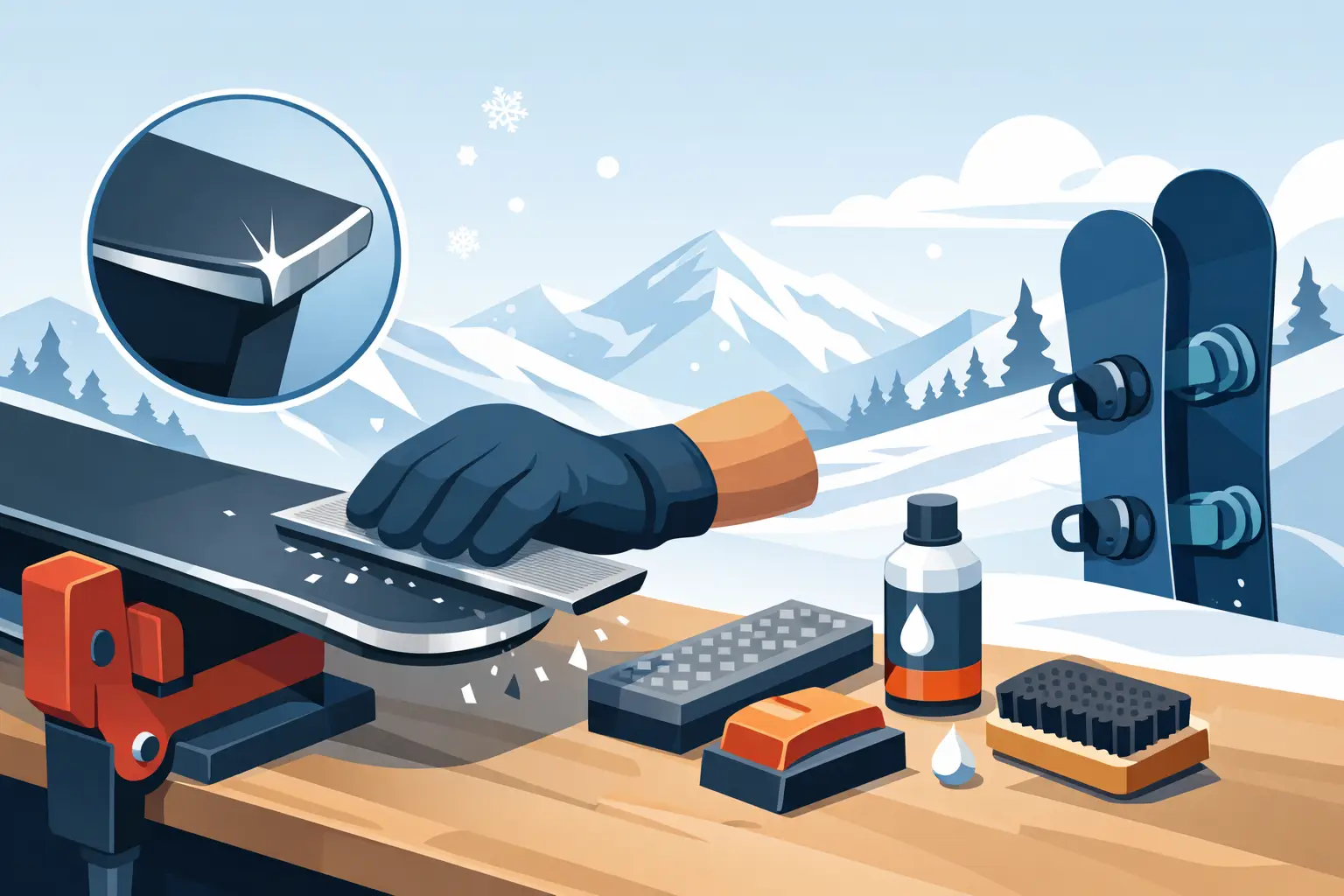
Nothing ruins a good run faster than a board that won’t hold an edge. If your snowboard feels sketchy on harder snow, chatters through turns or looks a bit orange after storage, it’s time to sort the edges out. Knowing how to maintain snowboard edges properly makes a real difference to grip, control and how your board feels underfoot, whether you’re heading down groomers in Australia, chasing a Japan trip or squeezing in a few laps on a rough late-season day.
Edge care gets overlooked because it’s not as exciting as new bindings or fresh outerwear. But it’s one of the easiest ways to keep your setup performing the way it should. A clean, sharp edge helps you hold a line, feel more stable at speed and get more life from your board.
Why snowboard edge maintenance matters
Your edges do a lot of work. They bite into firm snow, help you control speed and hold the board steady when conditions get choppy. Over time, they pick up burrs from rocks, park features and lift queues, and they can also rust if the board is put away wet.
A neglected edge usually shows up in a few ways. You might notice less grip on icy patches, a hooky feeling entering turns, or a board that feels dead and vague when it should be lively. Sometimes the problem is obvious, like visible rust or rough spots. Sometimes it’s subtler, especially if edge wear has built up slowly across a season.
The good news is you do not need to be a full-time tuner to stay on top of it. Basic edge maintenance is straightforward, and once you know what to look for, it becomes part of regular board care.
How to maintain snowboard edges without overdoing it
The main mistake riders make is either ignoring the edges completely or filing them too aggressively. Sharp is good, but there’s a point where too much edge can make a board feel grabby, especially for beginners or park riders.
For most all-mountain riders, the goal is consistency rather than chasing a race tune. You want edges that are smooth, clean and sharp enough to hold when the snow firms up. If you mostly ride park, you might prefer a slightly more detuned feel near the contact points so the board is less catchy on rails and boxes. If you ride faster, steeper terrain, you’ll usually want a cleaner, crisper edge along more of the board.
That’s why edge maintenance is never exactly the same for every rider. It depends on where you ride, how often you ride, and what kind of feel you like from your setup.
What you need to check your edges
You can inspect your edges with good light, a dry cloth and your fingers, as long as you’re careful. Run your hand lightly along the metal edge, not directly across it, and look for rough spots, nicks, rust and dull sections. If the edge catches on the cloth or feels inconsistent from one section to the next, it probably needs attention.
If you’re doing basic maintenance at home, a gummy stone is the easiest place to start. It helps remove light rust and smooth small burrs without taking off too much metal. For a proper sharpen, you’ll need a file and an edge tool set to the right angle, but that step matters more because poor technique can do more harm than good.
A bench or tuning stand helps, but it’s not essential for quick touch-ups. The bigger thing is keeping the board stable so you’re not guessing with your pressure.
Removing rust and small burrs
Light surface rust looks worse than it is. If your board has been stored damp or packed away after a trip, you might see orange spotting along the edges. In most cases, a gummy stone will clean that up quickly.
Work gently along the affected area in smooth passes. You’re not trying to grind the edge down – just remove the rust and tidy the surface. The same goes for small burrs caused by hard impacts. A few light passes can smooth the damaged spot and stop it from affecting how the board tracks.
If the rust is heavy, the edge is deeply pitted or there’s obvious impact damage, it’s usually smarter to have the board checked in a workshop. Deep corrosion and compressed edge sections can turn into bigger problems if you keep riding them.
Sharpening snowboard edges the right way
When people ask how to maintain snowboard edges, sharpening is usually what they mean. It’s also the part where technique matters most.
Snowboard edges are usually tuned to a set side edge and base edge angle. If you do not know your board’s current tune, filing freehand is a bad idea. You can create uneven bite, remove too much material or change the way the board rides. That’s why a proper edge tool matters – it keeps the angle consistent.
Use smooth, even strokes in one direction with the file seated properly in the guide. Let the tool do the work. Pressing too hard or sawing back and forward usually leaves a rougher finish. After filing, a diamond stone can help smooth and polish the edge.
If that sounds a bit fiddly, that’s because it is. Riders who like doing their own tuning can absolutely learn it, but if you’re not confident, workshop support is money well spent. A clean professional tune can reset the board properly, especially before a trip.
Should you detune the tips and tails?
This is where it really depends on how you ride. Detuning means slightly dulling the edge near the contact points so the board feels less catchy. For park boards and beginner setups, that can make sense. It can also help if your board feels overly aggressive or hooky.
On the other hand, if you spend most of your time carving groomers or riding firmer snow, too much detuning can reduce hold where you want it. The trick is restraint. You’re only softening specific sections, not making half the board blunt.
If you’re unsure, start conservatively. You can always take a little more edge off, but you can’t put it back.
How often should you maintain snowboard edges?
There’s no perfect number because snow conditions and riding style change everything. A rider doing one annual snow trip on soft spring snow will not need the same maintenance as someone riding hardpack every weekend or sliding rails in the park.
As a rough guide, inspect your edges after each trip and give them a proper look if the board starts feeling different underfoot. Light rust removal and burr cleanup can be done as needed. A full sharpen is more occasional – usually when grip has noticeably dropped off, after repeated impacts, or before an important trip where you want the board feeling fresh.
The smartest habit is regular inspection rather than waiting for a major problem. Small fixes are easier, cheaper and better for the life of the board.
Storage matters more than most riders think
A lot of edge issues start after the riding is done. Put a wet board in a bag, leave it in the boot overnight or store it somewhere damp, and rust can show up fast.
After riding, dry the board with a towel, especially around the metal edges. If you’re travelling home from the mountain, unzip the bag once you can and let the gear air out. For off-season storage, keep the board somewhere cool and dry, away from moisture and big temperature swings.
A wax before storage helps protect the base, and while it’s mostly about the base rather than the edges, keeping the whole board in good condition reduces the chance of it being forgotten and left to deteriorate.
When to do it yourself and when to use a workshop
Home edge maintenance is great for light rust, quick deburring and simple upkeep between trips. It saves time, helps you learn your gear and keeps your board feeling dialled in.
But there are times when a workshop is the better call. Deep edge damage, compressed sections from rock hits, uncertain bevel angles, base-high or edge-high issues, and boards that just feel wrong after a home tune all deserve expert attention. A proper workshop can also tune the board to suit the way you ride, which is worth it if you want the best performance from your setup.
At Mac’s, that kind of practical snow gear support is part of what specialist stores do best. It’s not just about selling boards – it’s about helping riders keep them running properly all season.
The small habits that keep edges in better shape
Good edge care is mostly about consistency. Dry the board after riding. Check the edges before and after trips. Clean up light rust early. Don’t file away metal just because you can. And if the board has taken a decent hit, deal with it before the damage spreads.
Snowboards cop a beating, especially when conditions are mixed and travel days are messy. But if you stay on top of the edges, the board will reward you with better grip, smoother turns and a more reliable feel when the snow gets firm.
A well-maintained board always feels more fun to ride, and that’s the whole point when you’re gearing up for winter.
